

Missouri hospital treats liver cancer with bubbles, sound waves that ‘liquefy’ tumors
Mercy Hospital St. Louis
St. Louis, Mo.
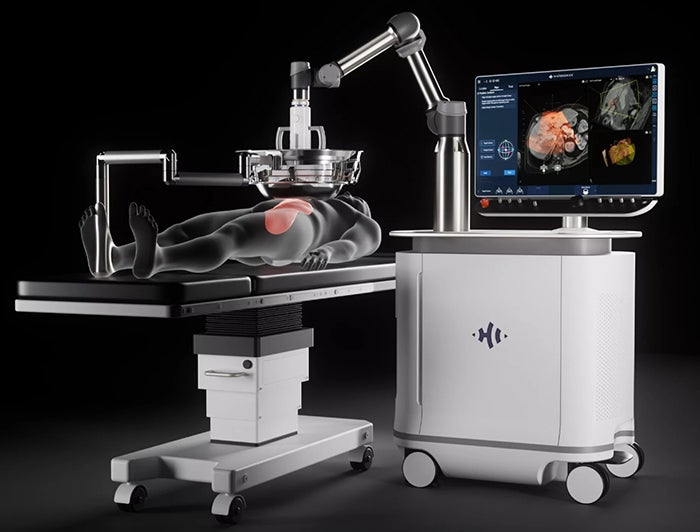
Edison® Histotripsy System product photo courtesy of HistoSonics
Mercy Hospital St. Louis is now using a cancer treatment that sounds more like science fiction than modern medicine: “Bubble clouds” and sound waves are being deployed to destroy liver tumors — painlessly.
Mercy is the first hospital in Missouri to use the Edison® Histotripsy System, a non-invasive technology that liquefies tumors without surgery, chemotherapy or radiation.
The histotripsy system works by delivering precise, image-guided ultrasound pulses that create tiny bubble clouds from gases within the tumor. These bubbles rapidly expand and collapse, mechanically breaking down targeted tissue while sparing surrounding healthy areas. Unlike conventional cancer treatments, the approach avoids heat, needles and ionizing radiation, offering a gentler alternative that has been researched for more than two decades and evaluated in multiple clinical trials.
Mike Wess, 82, was the first patient to undergo the histotripsy procedure. His first liver surgery in 2020 was complex, took about seven hours and required weeks of painful recovery. With histotripsy, Wess was home and back to normal the same evening — no pain, no incision and no recovery time.
“This is a game changer for our patients,” said Peter DiPasco, M.D., Mercy surgical oncologist and chief physician executive for Mercy cancer services. “For people diagnosed with liver cancer or with tumors that have spread to the liver, this technology opens the door to treatment options they may never have had before — and does so with far less discomfort.” Mercy leaders say bringing histotripsy to St. Louis underscores the health system’s commitment to advanced, minimally-invasive care, with potential applications for other difficult-to-treat cancers already under study.
“Having these tools to help remove difficult tumors, including the potential for use in kidney tissue, is a major leap forward for our patients,” said Gautum Agarwal, M.D., Mercy urologic oncologist and Mercy Precision Medicine director.