

Learn benefits of integrating community health workers into hospital teams
Community health workers (CHWs) can become crucial links between hospitals and health systems and the communities they serve, helping patients overcome barriers to care, according to speakers at a recent Association for Community Health Improvement workshop.
Bella Irizarry, a CHW program coordinator for the Buffalo (N.Y.) Urban League, said she was able to help numerous patients who resisted hospital visits during her work as a CHW with Catholic Health System. For example, she helped a woman get a needed blood transfusion. She also tracked down an infant with dangerous levels of lead in his bloodstream and connected him to treatment.
Nancy Combs, director of community health, equity and wellness at Henry Ford Health System in Detroit, said that employing CHWs has vastly improved the health of the surrounding community and reduced health care costs.
The health system is part of the Women-Inspired Neighborhood (WIN) Network, which brought together CHWs and certified nurse midwives to help reduce Detroit’s high infant mortality rates. The midwives and CHWs visit at-risk mothers at home and follow up with them between sessions, among other efforts.
“It is the magic of the community health worker — and in this case totally enhanced by the group prenatal visits and the very important role of the certified nurse midwife,” Combs said.
She said it’s important to strengthen clinical teams, especially through dedicated team-building exercises, before the CHW comes on board: “Be very clear on team roles and allow for shadowing — not just the CHWs shadowing the clinicians, but the other way around, too.”
Grace Tate, executive vice president of the Buffalo Urban League, said CHWs should be “of and from the communities they serve,” which helps forge better understanding and trust between hospitals and their communities. She said CHWs also benefit from ongoing education, such as on social determinants of health, and should be able to measure their progress, which helps program leaders show value and secure funding.
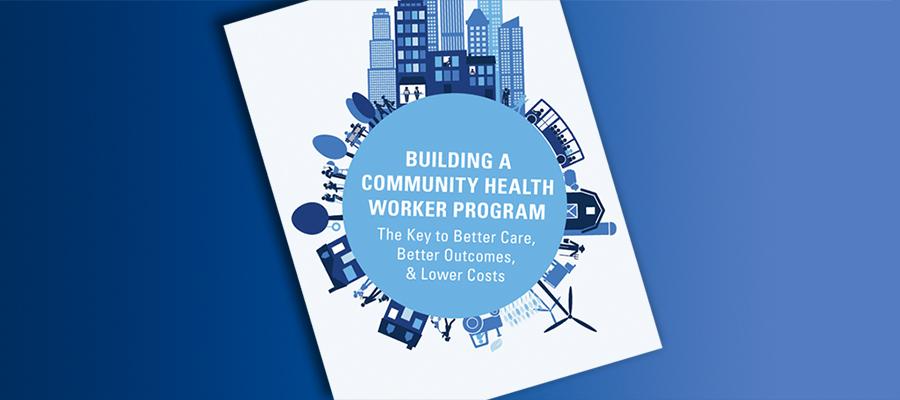
For more information, the AHA and National Urban League offer a compendium of resources to help hospitals and health systems implement successful and sustainable community health worker programs.
The March workshop was held in conjunction with ACHI’s 2019 National Conference in Chicago. ACHI is an affiliate of the AHA and its Health Research & Educational Trust.