


The Smart Hospital of the Future - Connecting Systems, People and Technology
Smart Hospitals Represent the Future of How Clinicians Will Work and How Patients Will Experience Care
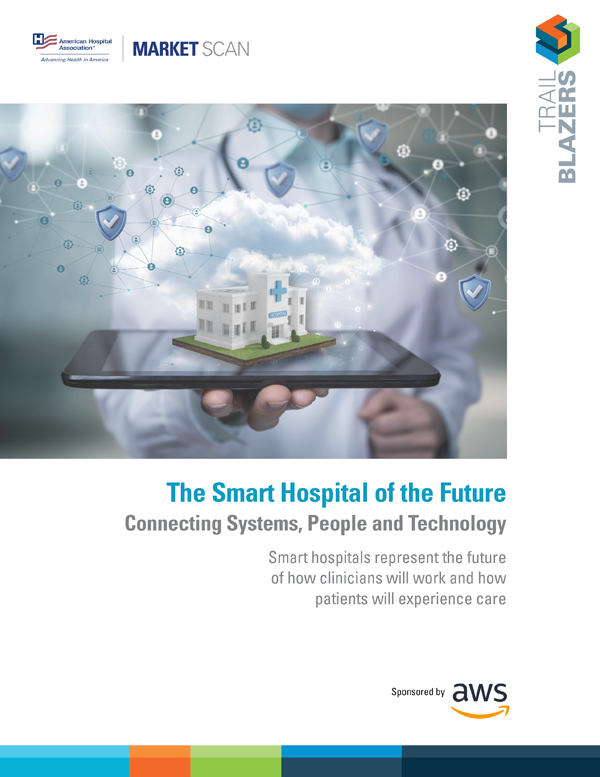
Hospitals are rapidly advancing toward a new model of digitally connected, intelligence-driven care. The latest AHA Trailblazers report, “The Smart Hospital of the Future: Connecting Systems, People and Technology,” explores how leading organizations are integrating cloud-based infrastructure, interoperable systems, virtual tools and ambient AI into everyday clinical workflows.
At the center of this shift is a modern IT foundation capable of linking data, devices and teams in real time. When systems work together securely and reliably, clinicians can document more efficiently, patients can engage more actively, and hospitals can evolve toward a more proactive, connected model of care.
Sponsored by:
TrailBLAZERS

Case Study: Ochsner Health
Reducing Documentation Time with Ambient AI
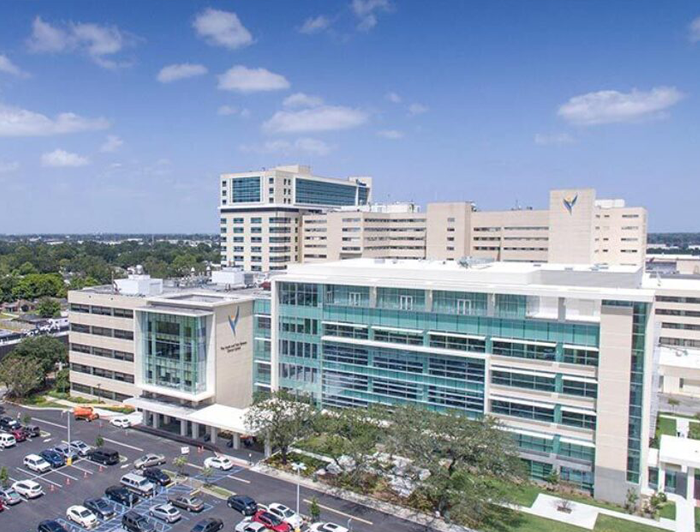
Ochsner Health, the largest nonprofit health care provider in the Gulf South, partnered with DeepScribe to reduce the documentation burden on its 4,700 physicians. After evaluating several platforms, Ochsner selected ambient AI that could adapt to specialties with highly variable clinical terminology—from ophthalmology to oncology.
By automatically generating draft clinical notes from clinician-patient conversations, the system has significantly reduced daily documentation time. One nephrologist reported decreasing charting from two to three hours per day to just minutes per note. Clinicians also reported clearer notes and improved patient interactions, with 96% of patients saying they would recommend their provider after visits using the technology. Ochsner now plans a systemwide expansion.
Case Study: Wellstar MCG Health
Reducing Transfers and Readmissions Through Hybrid Care
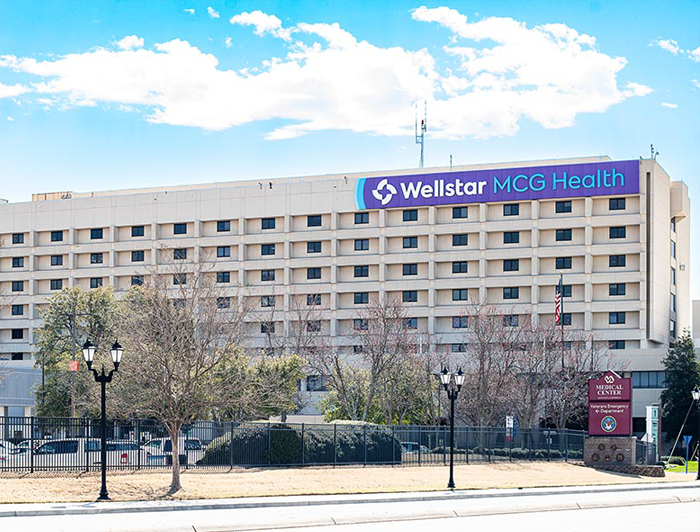
To support rural hospitals struggling with limited budgets, high acuity patients and an increasing risk of closure, Wellstar MCG Health partnered with Amwell to build a hybrid care network that integrates virtual consultations, remote monitoring and connected workflows.
Through this statewide model, specialists at Wellstar MCG Health provide real-time support to rural clinicians, helping them manage more complex cases locally. The system also launched Post-admit at Home, delivering short-term remote monitoring and temporary Wi-Fi support for recently discharged patients.
Since implementation, Wellstar MCG Health has reduced patient transfers from 80% to 35%, cut readmissions from 15% to 7% and saved an estimated $454,000 per month—while boosting patient satisfaction and care continuity.

Case Study: Cedars-Sinai
Testing AI Assistant App to Ease Nurse Documentation
Cedars-Sinai is piloting an AI-powered nurse documentation assistant designed to reduce administrative burden and give nurses more time with patients. Using mobile, voice-enabled tools, nurses can dictate real-time updates that are transcribed, structured and mapped into the EHR for review.
The pilot—launched on a 48-bed surgical unit—has received strong early feedback. Nurses report shorter documentation time, lower cognitive load and more capacity to focus on direct patient care. Cedars-Sinai plans to evaluate the pilot for expansion across additional units and disciplines.