

Houston Methodist researchers discover a strategy to strengthen breast cancer treatment effectiveness
Houston Methodist Hospital
Houston, Texas
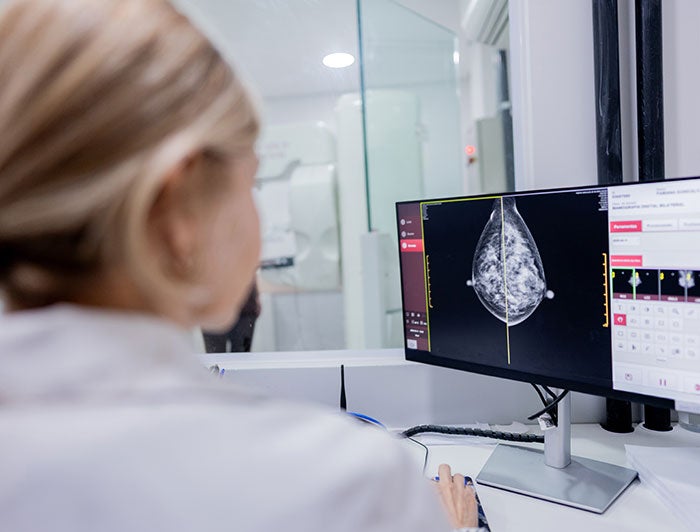
Researchers at Houston Methodist have identified a promising new therapeutic target that could help overcome treatment resistance in advanced breast cancer patients. In a recent study, investigators analyzed 47 patients and 109 pretreatment metastatic lesions treated with trastuzumab deruxtecan (T-DXd), a commonly used therapy for metastatic breast cancer. The team discovered that S100-RAGE signaling — a pathway that helps cancer cells survive, adapt and resist treatment — appears to be a key driver of early resistance to the drug. The findings could help physicians better understand why some patients fail to respond to T-DXd as it becomes increasingly important in the treatment of breast cancer.
The research also points to a potential strategy for improving outcomes. “Our study suggested that S100–RAGE signaling may indicate early resistance to this drug and that even drug combination therapies may be less effective. But the exciting part is that this pathway appears targetable,” said Stephen Wong, Ph.D., chief of medical physics at Houston Methodist, who co-led the study. “Using therapeutic options to block the signaling pathway made the cancer cells sensitive to early-line treatment. In metastatic lab models, therapeutic combination with this early treatment significantly reduced metastatic lesion number, lesion size and overall tumor burden,” Dr. Wong said. The findings raise the possibility of developing new combination therapies that target S100-RAGE signaling to strengthen treatment effectiveness for patients with metastatic breast cancer.