

Approaches to Prevent Targeted Violence in Hospitals and Health Systems
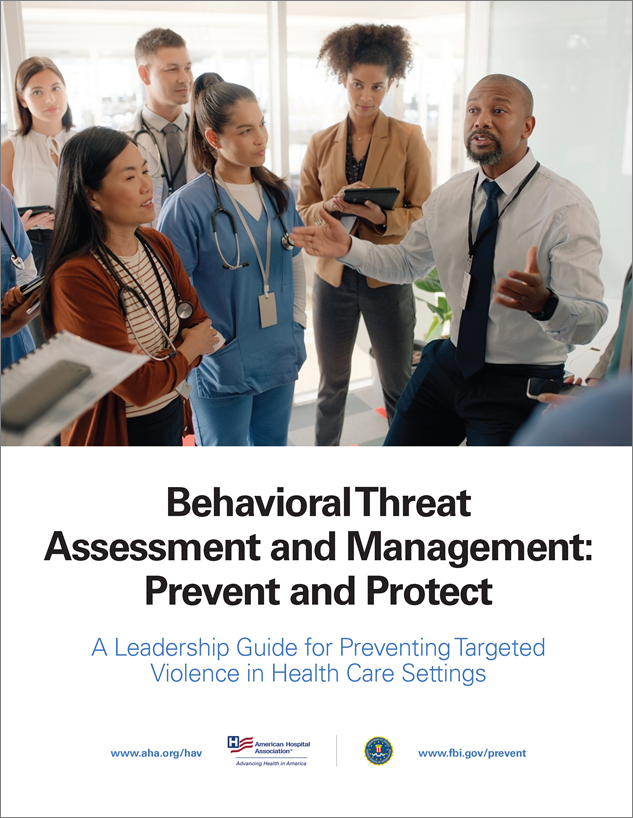
The AHA has partnered with the FBI’s Behavior Analysis Unit-1, which houses the Behavioral Threat Assessment Center, to co-develop resources to prevent targeted violence in health care settings. As part of this partnership, the FBI enlisted national experts to contribute to a leadership guide to support health care leaders as they develop and strengthen their efforts to address behavioral threat and assessment management (BTAM). These experts also have authored supplemental, tactical articles for security professionals or other members of the health care workforce who want to learn about BTAM in more detail.
Recognizing the unique challenges faced by health care organizations, this leadership guide provides practical, evidence-based tools and strategies to enhance security measures and threat management protocols. It includes templates, models and references for hospitals and health systems to use in establishing their own BTAM teams. These multidisciplinary teams are critical for proactively identifying and mitigating potential threats before they escalate into acts of violence.
In addition, it offers guidance on how to involve local law enforcement and the FBI into hospital-based BTAM efforts. These collaborations are essential for a unified approach to threat assessment and violence prevention, leveraging the expertise and resources of both health care and law enforcement professionals. By fostering strong partnerships and communication channels, health care facilities can ensure a coordinated and effective response to any threats that may arise.
Finally, the guide provides direction on critical training and education for all health care team members, equipping them with the knowledge needed to recognize warning signs of violence and respond appropriately. It also highlights best practices for maintaining a culture of safety and vigilance within health care environments and promoting continuous improvement and resilience in the face of evolving threats.

Section 1:
Defining Targeted Violence in Health Care Settings
Targeted violence in health care refers to intentional and harmful acts where health care professionals, patients and health care facilities are specifically singled out as targets. Such acts of violence can take many forms, including physical assaults, verbal threats, harassment or large-scale attacks.

Section 2:
What Is Behavioral Threat Assessment and Management (BTAM)?
The BTAM process is an ongoing, iterative approach to preventing targeted violence before it occurs. Implemented correctly, the BTAM process provides a systematic approach for identifying, assessing and managing the threat of violence. It relies on all people involved in the health care setting — including health care workers, patients and visitors — reporting behaviors that cause a concern for safety, and the organization’s trained BTAM team responding to the concern by triaging and assessing the situation and creating a response plan.

Section 3:
Establishing BTAM Teams and Partners
Developing and supporting BTAM teams within the health care setting has been identified as a critical tool to reduce violence in health care by the International Association of Healthcare Safety and Security and was recently identified as the number one recommendation for hospitals to help prevent mass violence by the National Council for Mental Wellbeing.

Section 4:
Training and Educating the Workforce about BTAM
All members of the health care workforce, including administrative leaders, frontline staff and support personnel, should be consistently educated and trained in identifying warning signs that may lead to targeted violence.
Case Studies
Many members of the AHA are implementing BTAM principles and processes in their organizations. Learn more from colleagues who have taken the critical steps of creating and maintaining BTAM teams, establishing partnerships with law enforcement and other community partners and educating the workforce about how to identify threats of targeted violence.
Additional Resources
From the AHA:
- Hospitals Against Violence
- Mitigating Targeted Violence in Health Care Settings
- A Tiered Approach for Addressing Concerns and Targeted Violence
- FBI Violence Prevention Strategies to Assess and Manage Threats Against Health Care (Podcast)
- Mitigating the Risk of Violence (Issue Brief)
- Violence Mitigation in a Culture of Safety (Issue Brief)
- Providing Trauma Support to Your Workforce Following an Incident or Threat of Violence (Issue Brief)
- Community Violence Intervention (Issue Brief)
From the FBI
- Prevent Mass Violence
- Behavioral Analysis
- HIPAA Privacy Rule: A Guide for Law Enforcement
- Making Prevention a Reality: Identifying, Assessing, and Managing the Threat of Targeted Attacks
- Possible Attackers - A Comparison of Active Shooters and Persons of Concern
- Partnerships Are Key to Disrupting Violent Plots
- FBI Active Shooter Safety Resources
- Beyond Belief: Preventing and Countering Violent Extremism in America
- Article Compendium