

Chair File: Leadership Dialogue — The Role of Advocacy in Advancing Health Care with AHA Executive Vice President Stacey Hughes
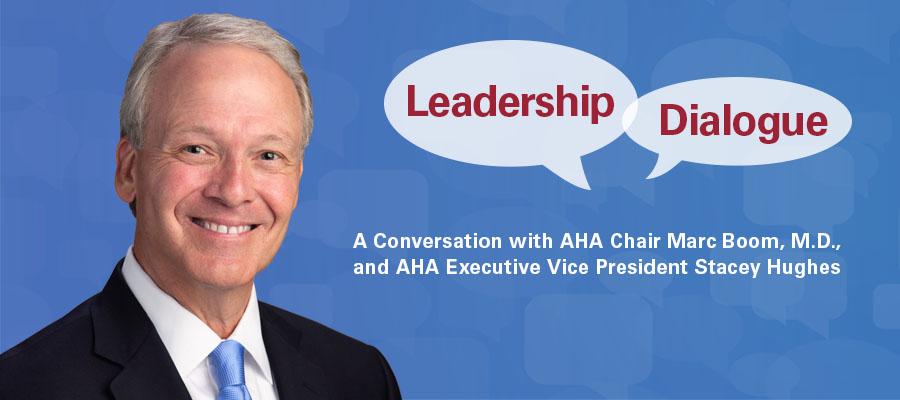
We’re at a watershed moment in health care, which gives us opportunities to strengthen how we serve patients and communities. Health care leaders must help find solutions and advocate for the people who depend on us.
In this episode, I am joined by Stacey Hughes, AHA executive vice president of government relations and public policy. Stacey oversees the AHA’s legislative, political, regulatory grassroots and legal advocacy efforts.
Stacey and I discuss the important role that advocacy plays in advancing health care, what’s happening in Washington, and how hospital and health system leaders can support this work. Key topics we touch on include promoting affordability, bringing stakeholders together, and sharing and amplifying hospital stories.
Stacey says she sees “more opportunity for bipartisan solution” on health care issues and notes “it will take all stakeholders.” Showcasing real stories, real challenges and specific data are crucial.
I hope you find these conversations interesting and insightful. Look for them once a month as part of the Chair File in 2026.
View Transcript
00:00:00:02 - 00:00:21:00
Tom Haederle
Welcome to Advancing Health. Amplifying hospitals messages and stories is essential for keeping health care healthy. April's Leadership Dialogue podcast explores how the health care field's advocacy on things such as affordability is getting through to lawmakers and spurring action.
00:00:21:02 - 00:00:48:03
Marc Boom, M.D.
Thank you, everyone for joining me today. I'm Dr. Marc Boom. I'm the president and CEO of Houston Methodist, and I am the board chair of the American Hospital Association in 2026. As we continue this series of discussions, this month I want to shift our focus slightly to advocacy. As you know, and hopefully many of you attended, we just held our Annual Membership meeting for the AHA in Washington, DC, where the attendees participated in many sessions on a lot of key topics within the field
00:00:48:03 - 00:01:15:20
Marc Boom, M.D.
and were able to hear directly from lawmakers and policy effort experts. A major theme of the meeting and, of course, a core principle of the AHA’s work on behalf of our entire profession and field is advocacy. So I thought this would be a great time, an opportunity to further spotlight its importance to this broader audience. So I'm very pleased today to be joined by a very impressive individual who does this every day so well for the AHA,
00:01:15:20 - 00:01:54:29
Marc Boom, M.D.
and that is Stacey Hughes, who is the AHA's executive vice president of government relations and public policy. If you don't know Stacey, she oversees the AHA's legislative, political, regulatory, grassroots and legal advocacy efforts and is widely recognized for combining her deep understanding of very complex health care policy with tremendous political acumen and experience. Before joining AHA she held multiple leadership positions in the Senate and immersed herself in health care policy, managing major legislation, coordinating with various members in offices on both sides of the aisle and running House-Senate conference committees.
00:01:55:01 - 00:02:18:20
Marc Boom, M.D.
Before we jumped in the conversation, you know, many of you have heard me speak, know that one of my guiding principles applies significantly when we talk about advocacy and policy. And that's me talking about what I see as a sacred "and" when we really need to be thinking in terms of "and" rather than "or." And obviously, that is something in the advocacy and political realm, we oftentimes do see a lot of or thinking.
00:02:18:22 - 00:02:45:17
Marc Boom, M.D.
And I believe when we embrace and mentality, when we listen to others with different viewpoints, we work with others from really across the spectrum. It opens up space to listen, to understand, compromise in ways that allow us to find common ground, and we can thereby advance the care and health for our patients. We're facing very challenging times, no question, but we have a profound responsibility to advocate for all of our patients and for our communities. And to be effective in doing that
00:02:45:17 - 00:03:12:19
Marc Boom, M.D.
it means we approach change, the challenges, and the opportunities with that and mentality that I described. So now let's jump into our discussion. Stacey, again, thank you for being here. Let's start with the intersection of policy and advocacy. You've had, as I mentioned before, an impressive career working with both lawmakers and policymakers. Give us a little insight on how those stakeholders think about and how they approach the health care issues that are important
00:03:12:19 - 00:03:16:02
Marc Boom, M.D.
and what things when we advocate, break through with them.
00:03:16:04 - 00:03:45:09
Stacey Hughes
It's a great question, and I think it's very cyclical in terms of how the stakeholders look at health care policy through that prism. You can't not have any prism without mentioning the debt. We have a $39 trillion annual debt in 2026. We pay over 1.1 trillion a year just for net interest. So a lot of those stakeholders, quite frankly, because Medicare and Medicaid, as well as the subsidies, are such a significant piece of the federal budget, many policymakers are looking exclusively at that through the lens of the taxpayer
00:03:45:10 - 00:04:11:22
Stacey Hughes
are we able to sustain these services? You know, others, I think, almost all, do also look at the patient first. You know, in terms of what's happened with access? Is there high quality care? But right now, I would say if you're looking at this Congress and looking ahead, it really is about affordability. And I think what you're starting to see is more policymakers trying to balance that issue around affordability, as well as taxpayer and being able to have a healthy approach to looking at the deficit and debt, but also in terms of what is actually the care people are receiving.
00:04:12:00 - 00:04:42:04
Stacey Hughes
One of the big topics, obviously, around affordability is drug pricing. And if you look at any polling, Dr. Boom, you always see that as one of the highest political yields in terms of getting your arms around the drug pricing issue as well as commercial insurer accountability. I think those two issues have really taken the forefront at this Congress and, probably will for the coming year in terms of trying to find ways to take some of the friction out of patient's ability to access care and to access innovation, as well as access the care that they need.
00:04:42:07 - 00:05:07:24
Marc Boom, M.D.
I mean, it seems to me - thank you for "and," and thinking about really what our sacred purpose is as health institutions, which is to serve people. When those individuals we're talking about are responsive to their constituencies, right, they're serving humankind as well. It seems to me there should be great alignment there around finding solutions to some of the toughest problems, things like affordability.
00:05:07:26 - 00:05:17:01
Marc Boom, M.D.
I mean, do you think we can work together and, you know, focus on that "and" and focus on those commonalities, to drive that and to get there?
00:05:17:03 - 00:05:40:21
Stacey Hughes
I do and I think one thing we're seeing - it's not unusual - but it certainly seems very heightened right now. And that is each of the stakeholders in health care are kind of turning on each other. You know, there's this enormous blame game of who's responsible for access issues, affordability issues. I think that you're starting to see some fatigue with members of Congress, and stakeholders and policymakers, that they really just want to get to a place where we could take some friction out of the system.
00:05:40:21 - 00:06:02:13
Stacey Hughes
And I do think there's more opportunity for bipartisan solutions. I think we saw that even though it didn't get across the finish line on trying to look at ways to extend the Biden era enhanced premium tax credits. I know we worked hard on that with you and your team. But they didn't get there. But there was legitimate, authentic, bipartisan conversation to try to get to a solution.
00:06:02:15 - 00:06:19:18
Stacey Hughes
And I think you're seeing more and more of that as these particularly senators and congressmen, their constituents are fed up and the system isn't working for them. So I do think there's opportunity. It will take all stakeholders. And to your point, at the end of the day, these members really care about their their constituencies and they care about their hospitals.
00:06:19:18 - 00:06:43:00
Stacey Hughes
They care about their ability to access care. So I do think there's a there is an opportunity, as often is the case in Washington, that you often need an urgent situation or emergency or a action-forcing event, and whether that's going to be the budget and deficit or whether it's going to be just political demand as a result from their constituencies, it's going to require something that's going to force action.
00:06:43:02 - 00:07:04:10
Marc Boom, M.D.
Affordability is this obviously very key topic. We all see that. Do you see that as a very bipartisan issue right now? That's something you're hearing from both sides of the aisle is critically important Is it going to stay that way? Could it become more of a partisan type issue as we've seen some issues become? Because clearly that is a major area of focus for us.
00:07:04:10 - 00:07:13:13
Marc Boom, M.D.
And, you know, we believe that hospitals should help convene that work since we should all be on that same page about moving that forward for the people we serve.
00:07:13:15 - 00:07:33:09
Stacey Hughes
I totally agree with you that that is going to be the primary think, issue that's going to bring bipartisan conversations together. And the one thing about affordability, it is everyone, right? , It's drug pricing. It's devices. Premiums for health insurers if the employer is trying to continue to stay in that market for their employees, it's hospitals wanting to continue provide their services but not being paid
00:07:33:09 - 00:07:54:06
Stacey Hughes
at cost for their service. So everyone's trying to make it work. I do think affordability is here to stay. I think there's, you know, as we've gone through a period of inflation, you know, it's often hard to get that genie back in the bottle. And I think that there's just been an incredible increase in constituent polling. The number one issue, just out of Gallup last week or a couple weeks ago was, polling that reference
00:07:54:12 - 00:08:17:08
Stacey Hughes
health care is the number one issue. So I think even though the success of the ACA, that pendulum is swinging back and to your point about, you know, finding solutions, I think even Democrats recognize that while the ACA was a primary crowning achievement during the Obama years, people are recognizing it's still unaffordable and there is bipartisan recognition that we need to look under the hood and figure out, how do we do this?
00:08:17:08 - 00:08:27:29
Stacey Hughes
We've got people access to coverage, but is that coverage meaningful and can they afford it? So I do think this theme is going to stay with us and define much of the health care policy discussion in the coming years.
00:08:28:01 - 00:08:53:21
Marc Boom, M.D.
You know, as we talk about affordability in that theme, you know, one of the things that certainly frustrates me as a health system leader is because hospitals and doctors offices are where the action is, right. It's where things happen. We often seem to get pointed at around affordability issues, when what's constantly being missed in that is the input pricing to what we do is actually coming from other sectors and other parts, and so we end up sort of on the tip of that spear.
00:08:53:21 - 00:09:25:10
Marc Boom, M.D.
So with that, it seems like along the lines of affordability and everything else we do in advocacy, it's really important that hospitals are able to tell their stories and really both communicate with elected officials and constituencies and others the importance and the noble nature of what hospitals and people who work in hospitals and physicians and nurses and everybody do, and amplifying those stories and also bringing a deeper understanding to some of the complexities and maybe some of the misperceptions that are sometimes there.
00:09:25:10 - 00:09:41:01
Marc Boom, M.D.
So what's your advice on how to most effectively do that? I've heard you many times talk about how critically important getting those stories out throughout the country and every state, from all of our members is so important. How do we all best go about doing that?
00:09:41:03 - 00:09:55:14
Stacey Hughes
Well, you almost did it in your question, Dr. Boom. You really did lay out beautifully the some of the challenges that we face and being able to unpack it. I think there's a real art in advocacy, and I think that the but most of it is authenticity, and it's what the impact is of a policy is in patients
00:09:55:14 - 00:10:15:14
Stacey Hughes
and the patients we're serving. And to your point about it's a noble profession, we want to care for our communities. And being able to really showcase through real stories, real challenges, but also data. I mean, they want to understand what's going on in their backyard, the hospital that's in a member's district. They want to understand and they need to know what is the payer mix? What's happening, what can't we do
00:10:15:14 - 00:10:37:11
Stacey Hughes
perhaps when the OBBA, the One Big Beautiful Bill for business start to come online. What are the choices that we're going to have to make that may interrupt some access to certain services? I think to the degree that we can be as specific as possible, make sure we keep the patient as the center of our policy imperatives. And we make sure we explain well what is these different policies mean to our community
00:10:37:11 - 00:10:57:18
Stacey Hughes
is really important. But I think it is taking the time to have these conversations over and over again, bringing these policymakers into your facility. Show them what you do every day, what your nurses and doctors, what they're doing every day is really important. And I will say, you know, on an optimistic side, you know, members of Congress, the senators, they really love their hospitals.
00:10:57:18 - 00:11:23:03
Stacey Hughes
You know, I think while we're feeling some of the pressure from some of the other stakeholders' finger pointing, I do think there's a real opportunity to peel back that onion of all those input cost and what challenges we face. But also to your point, we have an obligation to also find creative ways on affordability, find ways that we can contribute to make the system more efficient, less expensive, reduce infection all the things that we do and bring those ideas forward as well.
00:11:23:03 - 00:11:27:12
Stacey Hughes
So we're contributing to a patient experience that's both more affordable and efficient.
00:11:27:14 - 00:11:49:24
Marc Boom, M.D.
As we have those dialogues, it strikes me - I believe this firmly in the bottom of my heart - that hospitals and physicians and really the caregiving side of the equation are part of the whole health care ecosystem. We're the ones with the relationships with the patients, just as our legislators have relationships with their constituents. It's not pharma, it's not supply chain.
00:11:49:24 - 00:12:14:00
Marc Boom, M.D.
It's not the payers. And that's I'm not knocking them in saying that. It's that we're the people right there at their side in an exam room, taking care of them, helping them in some of their toughest times, helping manage their wellness and everything else. So isn't it logical with the storytelling, everything else that hospitals step forward and help convene and help be that "and" kind of glue to help drive some of this forward?
00:12:14:00 - 00:12:33:24
Stacey Hughes
100%. And I think that in your leadership with our board and our association, we've really start to lean in more significantly on that conversation and dialog and how we can start convening more of a conversation on that point. And I think that we're very effective at it. I think members of Congress do appreciate what you just said. The role we provide a community, a community can't exist without us.
00:12:33:25 - 00:12:38:03
Stacey Hughes
I think telling that story is critical, and we have an obligation as well.
00:12:38:05 - 00:13:04:20
Marc Boom, M.D.
With all of that, you know, and I talk about the sacred "and" and one of the big underpinnings of that is the beauty of people coming at questions from different angles, different backgrounds and coming to compromise or coming to consensus. I mean, it's something I think and we'll talk some more about this a little later with AHA. We do, I believe, very well and very critically, since we have such a broad, diverse membership of so many different kinds of hospitals and health systems across the country.
00:13:04:27 - 00:13:21:13
Marc Boom, M.D.
But a big part of that then is compromise. And that has to play out in politics as well. Do you have any insights on kind of the current status today? What advocacy approaches might be most effective in finding solutions that can be bipartisan and where compromise happens?
00:13:21:16 - 00:13:45:11
Stacey Hughes
I think in terms of compromise, one of the things that, you know, when you think through is how does the whole ecosystem, all the stakeholders, come together and put forth something on the table that will help ease some of this friction? Right. And so I think that there is an opportunity for compromise. The question is everyone's have to be willing to come to the table with something that at least addresses whatever that pain point is.
00:13:45:18 - 00:14:03:21
Stacey Hughes
What's the pain point? You know, you mentioned how much we have hands on patients. And I think that you're seeing a lot of backlash, bipartisan backlash, against the middle man. In the middle, as some call it whether it's PBMs, whether it's the insurers, we need to bring forth ways which we can we can help identify solutions for that pain point.
00:14:03:23 - 00:14:26:06
Stacey Hughes
So I think, you know, we look across the whole system and there may be things that we're doing that when you say, hey, we can make this a little better, a little smarter, a little faster. So I think there are opportunities for compromise. I think that at some point, as I mentioned earlier, even Democrats notwithstanding the ACA success, they recognize that there are more issues out there in terms of the coverage that people have that are precluding their ability to get access to care.
00:14:26:09 - 00:14:47:20
Marc Boom, M.D.
So I want to close and asking a question about really unity within the hospital systems as a major "and," right? We as I mentioned, we represent, you know, 5000 hospitals. We represent hospitals of every sort and hospital systems of every sort across this great nation. Oftentimes, you know, what's good for one may not be good for another.
00:14:47:20 - 00:15:03:22
Marc Boom, M.D.
While sometimes things are good for all. How important? With all of this focus, especially as we tackled tough issues, compromise, working on affordability and things like that, how important is it that we remain unified as a voice within as a field and as a profession?
00:15:03:25 - 00:15:22:16
Stacey Hughes
Well, I will tell you, it is our superpower. We'll always be able to find solutions within the field writ large that benefit our hospital and health systems. And certain provisions might benefit some, but we'll always be working, rowing in the right direction to advance the field of writ large. And we are the envy of other trade associations. No other trade association, no other sector
00:15:22:16 - 00:15:47:17
Stacey Hughes
in health care is the number one employer in every congressional district, basically. Every congressman, senator has a hospital in their district or state. And we do incredible work and they know it. And I think that we are the envy. If you look at pharma, they're in the northeast. That's a, you know, a little bit the south, a little bit in North Carolina, you know, we have and we will we use our unity to bring forth our agenda for patients,
00:15:47:17 - 00:16:01:00
Stacey Hughes
it is beyond compare. And while there may be certain provisions or proposals that address some inequities around the field, we're going to work on those too. I think we all benefit and we're all working together because our voice is incredibly powerful.
00:16:01:03 - 00:16:35:03
Marc Boom, M.D.
I love that it's our superpower. So unity and is our superpower, I love that, I mean, I'll probably steal that. You may hear that from me again sometime. Well, Stacy, thank you so much for your time today. Sharing your always amazing insights. Thank you for the wonderful work you and the team do. For all of the members, through the American Hospital Association. As always, as health care leaders, when we're focused on our mission and we're focused on the patient at the center, and when our elected officials are focused on their constituents who are our patients and communities together, we can make very positive change, and together, we can advocate for policies
00:16:35:03 - 00:16:47:03
Marc Boom, M.D.
that will allow us to continue to enhance the care for all those that we serve. So thank you for taking the time to listen today. I'll be back next month for another Leadership Dialogue conversation. Thanks for listening.
00:16:47:03 - 00:16:54:20
Tom Haederle
To Advancing Health. Please subscribe and rate us five stars on Apple Podcasts, Spotify, or wherever you get your podcasts.