


Minding the Gap: Using Telehealth to Expand Access to Behavioral Health Services
The U.S. is in the midst of a behavioral health crisis, according to the National Center for Health Workforce Analysis at the Health Resources and Services Administration. In 2024, approximately 23% of all adults in the U.S. had a mental illness, and 48% of those individuals didn't receive treatment. Workforce shortages on the side of healthcare providers and stigma on the patient side limit behavioral healthcare access.
To meet growing demand for behavioral healthcare services and overcome obstacles preventing patients from accessing vital treatment, hospitals and health systems are increasingly implementing behavioral telehealth services. Telehealth — an umbrella term describing all aspects of virtual care — utilizes technology to facilitate care delivery without in-person interactions. This approach allows patients in rural areas to connect with clinicians without traveling long distances, and it's a more anonymous treatment method, as patients don't need to worry about neighbors seeing their car parked outside a psychiatrist's office. Additionally, the remote work options that come with telehealth programs increase health systems' appeal to prospective staff members, making it easier to recruit and retain behavioral healthcare professionals.
The report includes two real-world examples of how health systems can expand access to behavioral healthcare and improve workforce strategy with telehealth.
Sponsored by:
TrailBLAZERS


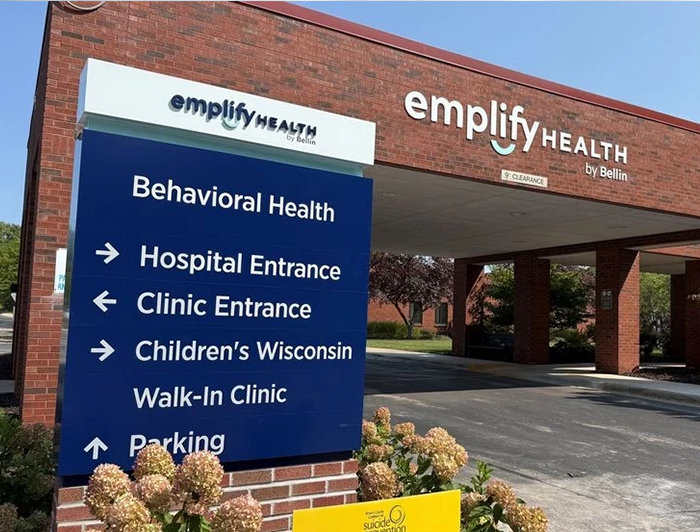
Case Study: Emplify Health
How Emplify Health expanded capacity to meet demand with behavioral telehealth
The team at Emplify Health Behavioral Health in Green Bay, Wisconsin, noted an increase in demand for care during the pandemic and knew they had to do something to address the escalating crisis. To eliminate barriers stopping community members from receiving vital treatment, the health system launched a behavioral telehealth program.
In 2020, Emplify Health Behavioral Health (then Bellin Psychiatric Center, prior to the 2022 merger of Bellin Health and Gundersen Health System) partnered with Iris Telehealth to offer virtual behavioral health services. Telehealth capabilities allow clinicians to gain insight into patients' home environments, and patients who otherwise would struggle to travel for in-person care (e.g., individuals who live in rural areas and those with young children) can still receive treatment virtually.
Six years after Emplify Health Behavioral Health debuted its telehealth services, the wait time between referral and appointment has decreased significantly. The provider sees about 500 patients per day who need behavioral care, and clinicians conduct about 40% of those visits virtually.

Case Study: CommonSpirit Health
How CommonSpirit Health tackled workforce and access challenges with telehealth
Chicago-based CommonSpirit Health operates 159 hospitals across 24 states, including 20 facilities in its Mountain Region, which spans Colorado, Utah and western Kansas. Like other health systems nationwide, CommonSpirit has noted growing demand for behavioral healthcare in recent years; however, providing those services has proved challenging due to workforce shortages and considerable distance between clinicians and patients in the rural areas the health system serves.
To expand access and overcome those obstacles to care delivery, CommonSpirit's Mountain Region team has worked with local high schools and colleges to establish reliable talent pipelines and partnered with a behavioral health telehealth organization to provide inpatient psychiatric consultation and medication management services. The health system started out offering behavioral telehealth services to its Colorado hospital patients and is expanding the program to its three rural hospitals in western Kansas.
This approach blends build and buy to expand access to care via telehealth today while creating pipelines for a stronger behavioral health workforce in the future.