

Webinar Recordings
Behavioral Health - Combating Stigma
The AHA and its members actively work to combat behavioral health stigma through promoting the use of patient-centered language, supporting integrated care models, and encouraging open dialogue about mental health and substance use disorders in health care settings. Programs and policies that actively aim to reduce stigma have been shown to positively impact treatment outcomes for both patients and for health care workers who need behavioral health support.
Health Care Leaders Sharing their Mental Health Journeys
Health care leaders play a critical role in reducing the stigma surrounding behavioral health in their organizations and their communities. In these videos, see how an administrator, a surgeon, and a nurse leader have used their own experiences to encourage others in the health care workforce to seek treatment.
From Tennis Star to Surgeon: Carrie Cunningham's Journey Through Depression and Recovery
Carrie Cunningham, M.D.’s story spans two worlds of achievement — professional tennis and academic surgery. Yet, behind the accolades, she faced suicidal thoughts, depression and addiction. When a colleague spoke up, it changed the course of her life. In this powerful and deeply personal testimony, Carrie shares her path through loss, treatment and recovery, and explains why she now speaks openly about physician suicide and mental health.
"How Do We Become Vulnerable First?": Reducing Stigma Around Mental Health Starts at the Top
Daryl Tol, former CEO of AdventHealth Central Florida, shares his personal struggle with anxiety that began in college and has continued through a successful executive management career. Tol explains that health care leadership must reduce the stigma around employees talking about their mental health, and it starts at the top.
A Nurse Leader's Journey: Embracing Kindness Amid Mental Health Struggles
Nurse leader and suicide survivor Bob Dent shares his personal struggle with mental health that has continued even while managing a successful career. Dent explains why health care leaders need to create safe spaces for patients, families and colleagues to talk about mental health.
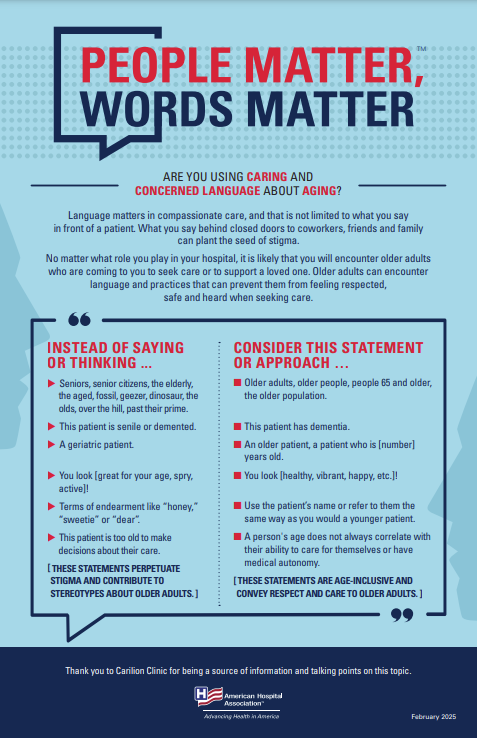
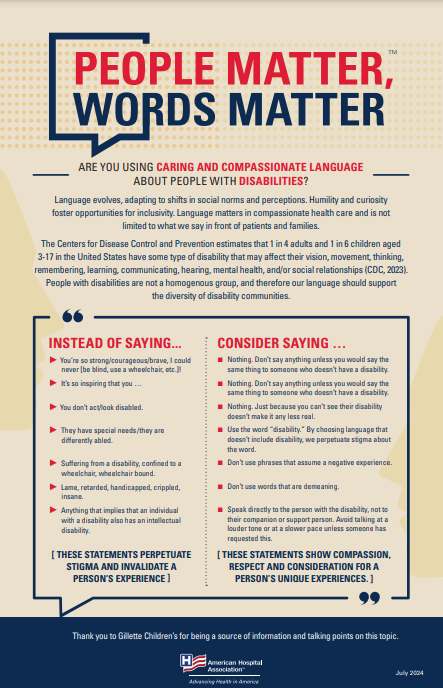
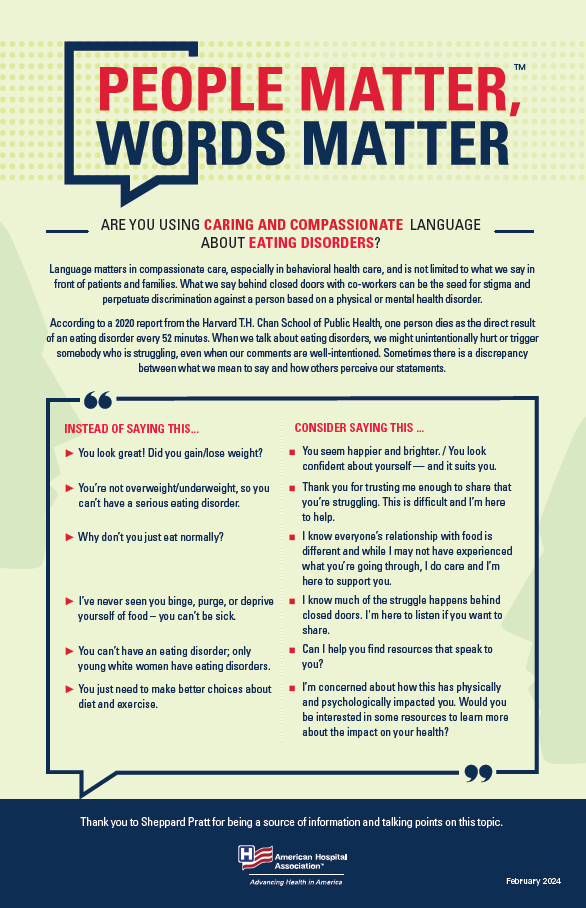
People Matter, Words Matter
The AHA, together with behavioral health and language experts from member hospitals and partner organizations, released a series of downloadable and shareable posters to help adopt patient-centered, respectful language. People matter and the words we use to describe them or the disorders they have matter.
Learn More
Podcast: Helping Parents and Kids Talk About Mental Health
Blog: How AdventHealth created a multicultural mental health movement
Perspective: Integrating Mental and Physical Health to Better Support Patients and Communities
Behavioral Health Strategic Priorities
Community Partnerships
Integration
Stigma
Suicide Prevention
More Behavioral Health Resources >
Related Resources
Guides and Reports
Advancing Health Podcast