


Connected for Care: How Interoperability Strengthens Trauma Response and Recovery
Hospital Leaders are Working with Technology Companies to Break Down Data Silos by Implementing Interoperable Systems that Work with their EMS Teams
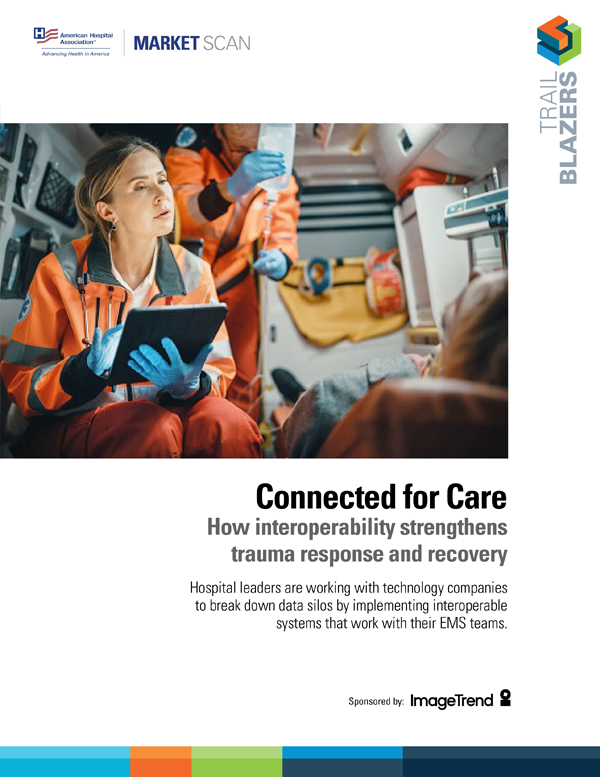
Hospitals rely on information from emergency medical services (EMS) to guide early trauma care decisions. Yet in many organizations, critical pre-hospital data does not reach clinicians until after treatment has begun, limiting visibility into patient condition, timelines and interventions at the moment decisions matter most.
This AHA Market Scan Trailblazers report examines how hospital leaders are working with technology partners to close these information gaps by strengthening interoperability between EMS ePCR systems and hospital EHRs. By breaking down data silos, organizations are enabling earlier access to field assessments, improving documentation accuracy and reducing the administrative burden associated with manual data reconciliation.
Rather than treating EMS connectivity as an add-on, the featured organizations view interoperability as foundational infrastructure — supporting faster decision-making, stronger trauma performance improvement and more resilient emergency care systems.
Sponsored by:
TrailBLAZERS


Case Study: Carilion Clinic
Automating EMS ePCR Data into the HER
Carilion Clinic, a seven-hospital system in Southwest Virginia, wanted clinicians to access EMS information earlier in the patient encounter. Under its previous workflow, paper EMS reports were scanned and uploaded later, delaying access to field assessments, medications and vitals.
By implementing standards-based interoperability between ImageTrend Elite and Epic, Carilion enabled automated transmission of ePCRs directly into the EHR. Clinicians could view EMS reports almost immediately, without printing, scanning or manual matching.
As a result, the system received more than 20,000 EMS reports electronically in the first year, improving ED readiness and allowing EMS crews to return to service faster after patient handoff.
Case Study: Mississippi State Department of Health
Streamlining Statewide Trauma Reporting
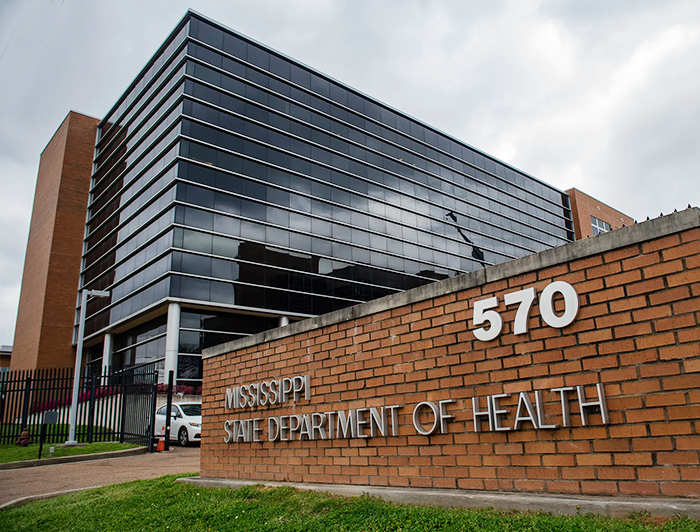
The Mississippi State Department of Health (MSDH) oversees trauma coordination across 94 hospitals. As it prepared to modernize its trauma registry, leaders sought a platform that would improve real-time reporting, data ownership and integration with EMS systems.
By implementing ImageTrend’s Patient Registry software statewide, MSDH gained immediate access to patient records, configurable state-specific workflows and automated EMS–hospital data integration. The system reduced trauma designation preparation time from several hours to less than 45 minutes per facility.
The case study highlights how state agencies can strengthen oversight, improve data quality and respond more quickly to hospital needs through interoperable, configurable registry platforms.