

Valley Regional Hospital CEO Peter Wright Leads with a Customer-focused Mindset
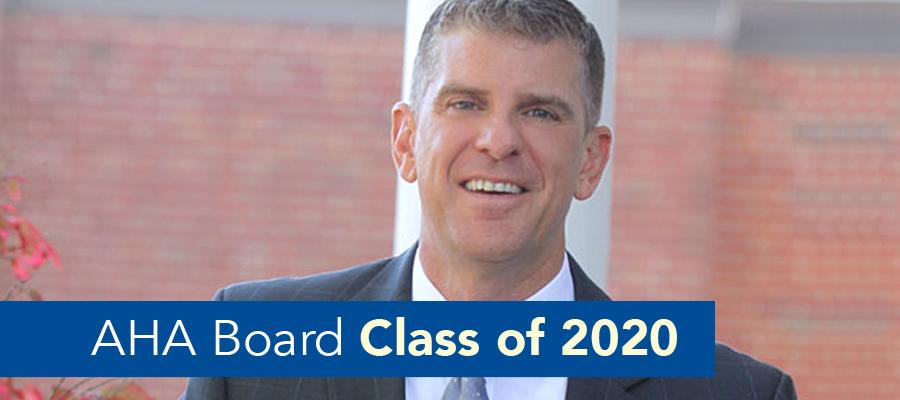
Before entering health care leadership, AHA Board Member Peter Wright, CEO of Valley Regional Hospital in Claremont, NH, was a police officer, ski resort manager, a coin buyer, and grew up working in his mother’s restaurant. But it was health care that stuck.
“One very sunny December day, I just remember thinking ‘I can’t wait to get to work,’” Wright says of his first hospital job, which he started 17 years ago. “I remember thinking, ‘this is what I’m going to do for the rest of my life.’ And for the last 17 years, I wake up every day truly excited to get to work.”
Wright’s non-traditional path has given him valuable insight into how to balance what he calls “the greatest mission in the world” with running a business. Not being born and bred in health care has enabled him to “think very differently than the traditional industry mindset.”
For example, Wright’s customer service background has given him clear insight into consumerism. This has been crucial for Valley Regional – which is in the vicinity of six other hospitals, including a world-class academic medical center — and has helped the hospital differentiate itself.
“Our patients and our team have a choice,” Wright explained. “And, we need them to choose to come to our facility.” To this end, Wright has helped Valley Regional staff to embrace what he calls “a resort style mindset,” in which patients are considered customers.
Wright was new to the organization, which was on the precipice of a “significant financial cliff” at the time when he stepped in as CEO.
Wright worked with Valley Regional’s board, medical staff and management team to make long-term, cultural and value-based changes to the organization. As a new CEO, he had to operate with utmost transparency to earn buy-in from his staff, medical team, community and board.
Today, Valley Regional is far more stable, Wright said, and much of this has to do with embracing consumerism.
“I ask staff all the time: ‘how many times can we say yes before we have to say no?’” Wright said. “In Valley’s history there was a period of time where the service wasn’t good and maybe the community didn’t reflect positively on the organization. There’s no doubt that our financial recovery over the last three or four years is solely because patients are making a choice to come to us because of the service we’re providing.”
In addition to this mindset, Wright credits the organization’s success to improving the cost of its care and its strong community relationships. “We’re so interwoven into what the fabric of the community is, and how it defines itself,” he said.
Although New Hampshire is fortunate to have what Wright calls a “wonderful spirit of collegiality,” as a small, rural provider surrounded by competition, Valley is still vulnerable.
That’s why Wright feels privileged to help advocate for hospitals on the AHA’s behalf.
“It’s a tremendous honor [to serve on the AHA board], but it’s also a big responsibility to understand what the diverse needs are and to be able to bring that in a cohesive thought to the board as we look to tackle the issues [in the field],” he said.