

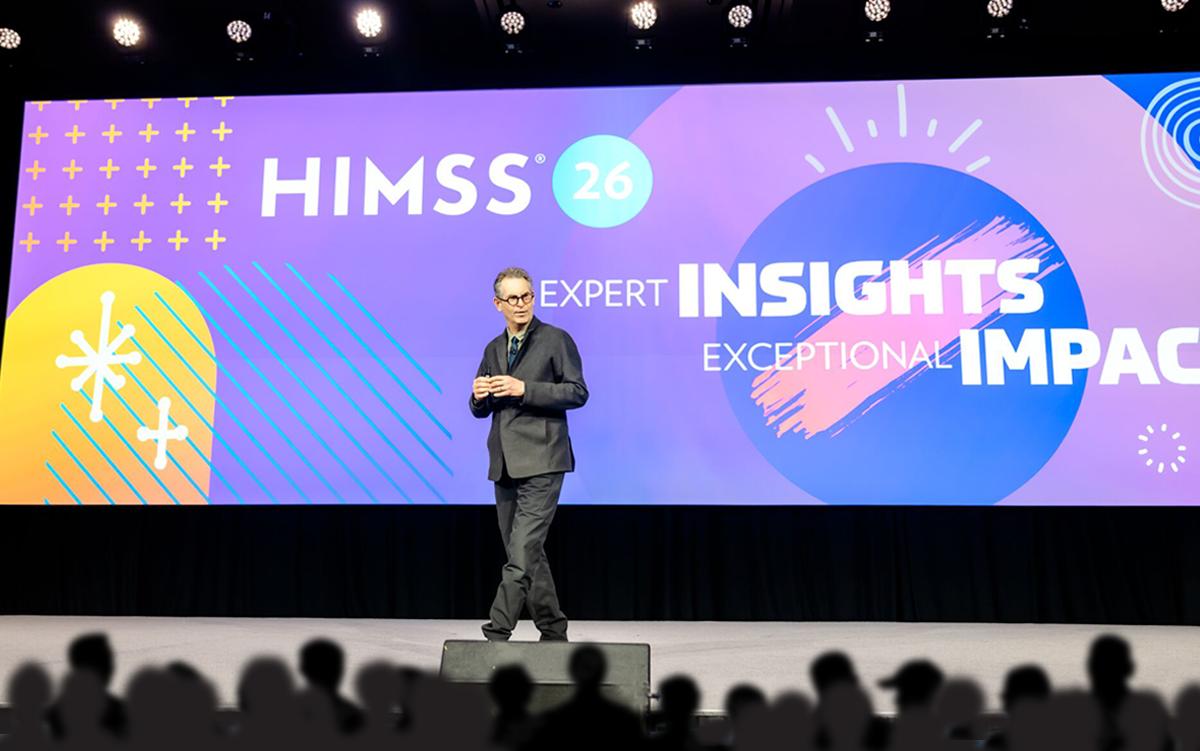
HIMSS 2026 Insights: How to Thrive in a Rapidly Changing Field
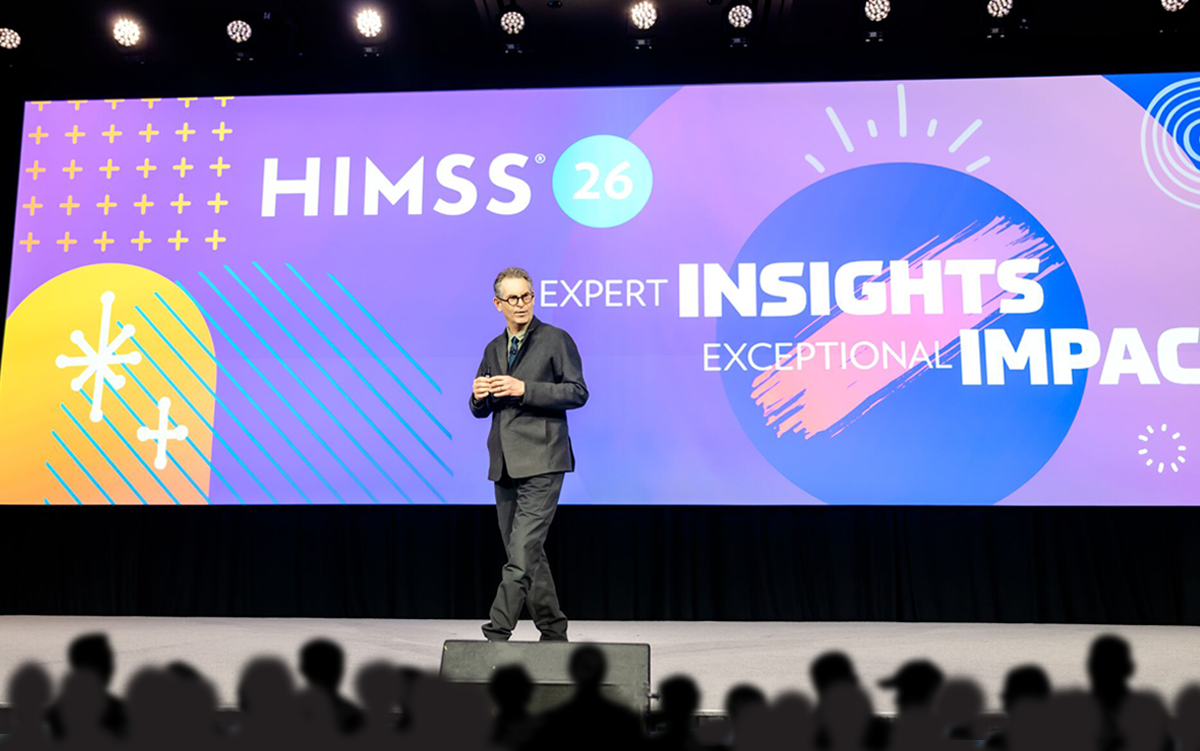
The buzz word for the first day of the 2026 Healthcare Information and Management Systems Society (HIMSS) Global Health Conference and Exhibition was “thriving,” HIMSS CEO Hal Wolf said in a video posted by Healthcare IT News, a HIMSS Media publication.
That theme kicked off three days of discussion among the thousands of health care professionals from around the world — including health system executives, leading tech vendors and digital health disruptors, among others — who gathered in Las Vegas from March 9-12 for HIMSS26.
Here are some notable insights experts shared during the conference.
1 | Collaboration between health systems and tech giants can enhance care delivery.
Alliances between clinicians and technology providers can support more effective care delivery, Sumbul Ahmad Desai, M.D., vice president of health and fitness at Apple, told attendees, according to HIMSS Media coverage of the event.
Apple is already working with health care providers to integrate its technology into day-to-day operations, streamlining workflows and improving care delivery. For example, Atlanta-based Emory Healthcare has partnered with Apple and deployed devices such as Mac, iPhone, iPad and Apple Watch systemwide. Nurses love utilizing Apple Watches for communication, Desai said
2 | Clinicians need structured methods and tools for evaluating AI models.
Many clinicians don’t have access to clear frameworks to assess the effectiveness and safety of AI tools, Nabile Safdar, chief AI officer at Emory Healthcare, and Bernardo Bizzo, senior director of artificial intelligence at Boston-based Mass General Brigham, told attendees.
"The biggest challenge we have is we lack benchmarks to assess how these tools are performing and how well they can help us," Bizzo said, as reported by the HIMSS Media publication MobiHealthNews.
Bizzo and Safdar discussed how health care leaders can solve that problem by pooling data and defining standardized strategies for assessing AI models. For example, Bizzo and his colleagues have launched the Healthcare AI Challenge, an initiative that enables researchers and clinicians to evaluate AI tools via shared datasets and standardized methods.
In the Healthcare Challenge’s “AI Arena,” clinical experts can assess outputs from AI models and note how different tools compare to each other and/or human performance for complex tasks, including medical record summarization, radiology reporting and image interpretation.
"As health care professionals, this is the information you want to know before investing in a model," Bizzo said.
3 | Interoperability doesn’t add value without data readiness.
While many providers have achieved the ability to transfer data between various systems, the information isn’t necessarily complete or consistent. Christy Bricker, vice president of strategic operations for cardiac device management software vendor Murj, advises hospital and health system CIOs and IT leaders to look beyond integration and prioritize data quality and operational usability, as reported by HIMSS Media publication Healthcare IT News.
“In some cardiac clinic databases, error rates can reach 50%," Bricker said. "In others, only 40%-60% of listed patients are truly active. Simply connecting these systems does not create value. It amplifies inefficiency and risk...the real issue is no longer, 'Can systems connect?' It is, 'Is the data accurate, normalized, and ready to support clinical and operational decision-making?' Interoperability without data readiness is incomplete."
Here’s what health care IT leaders can do to ensure data quality, according to Bricker:
- Audit legacy data environments and address factors such as inactive patient records and error rates before migrating to new platforms.
- Implement structured data governance for device and remote monitoring programs.
- Partner with vendors with proven track records of data migration and validation.
4 | Providers and patients can overcome language barriers with AI.
When clinicians and patients don’t speak the same language, it can be difficult to relay vital information such as discharge instructions, potentially leading to suboptimal outcomes and readmissions. Health systems can mitigate if not eliminate this significant hurdle to effective communication by adopting AI-powered translation tools, Tripp Partain, senior director of cloud engineering at Oracle, and Albert Villarin, M.D., chief medical informatics officer at New Hyde, New York-based Nuvance-Northwell Health, explained, according to a Healthcare IT News report.
"If we can’t communicate with patients, we're in the wrong business," Villarin said, according to the report. "Patients need us and trust us."
AI translation tools that integrate with electronic health record (EHR) systems can help health systems like Nuvance-Northwell that serve individuals who speak various languages ensure that every patient receives clear, accurate and culturally appropriate discharge instructions.
The ultimate goal is to incorporate a patient’s preferred language into clinical workflows, so that it automatically populates EHRs and facilitates the instant generation of communications in that language.
"We want the experience to be efficient and positive for both the patient and the provider," Villarin said.



Related Resources
AHA Center for Health Innovation Market Scan
AHA Center for Health Innovation Market Scan
Guides and Reports