

9 Inpatient Rehab Hospital Best Practices
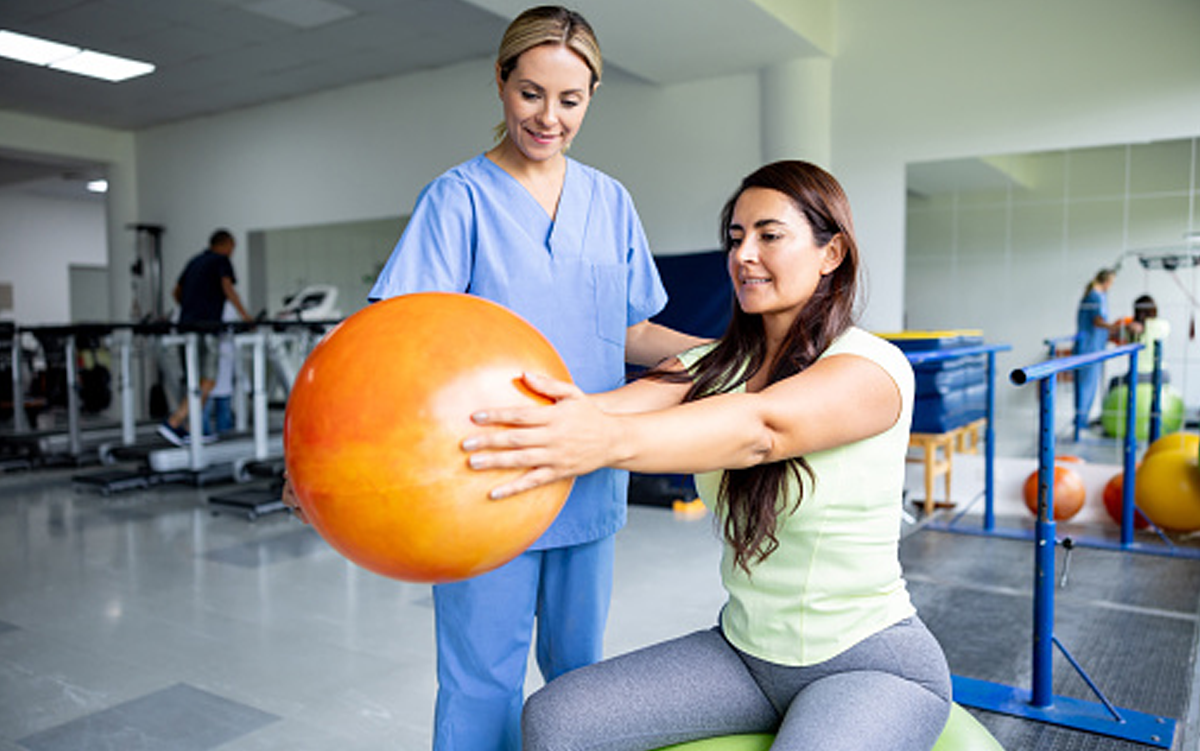
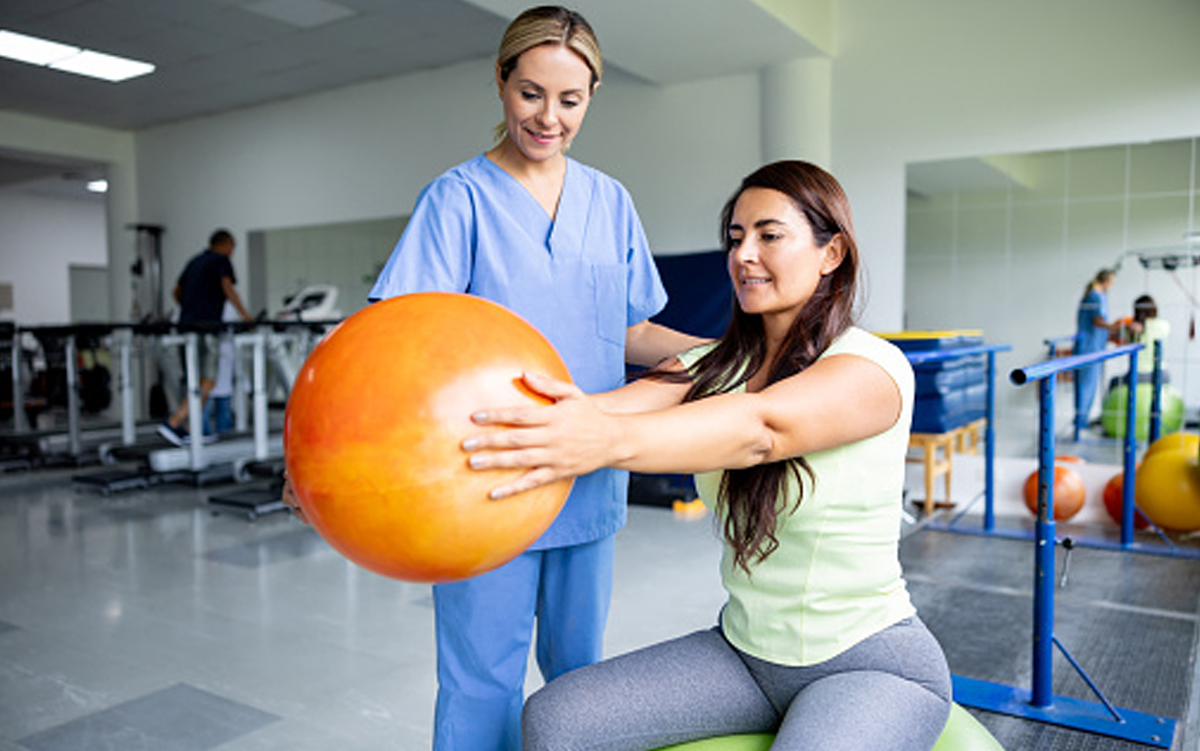
As acute care hospitals contend with challenges such as rising demand, workforce shortages and emergency department crowding, inpatient rehabilitation facilities have stepped in to ease the pressure on those providers while spearheading innovative treatment techniques to support better outcomes for patients who have experienced serious injury or illness.
For patients with complex needs, inpatient rehab hospitals provide vital care and support optimal recovery from conditions including, but not limited to, organ transplants, cancer, traumatic brain injuries, major burns, strokes, complex trauma and spinal cord injuries.
Several AHA members in the inpatient rehabilitation space recently shared these insights into best practices for optimal outcomes and how they’re continuing to explore forward-thinking treatments that improve patients’ lives.
(Note: This is not an exhaustive list of notable inpatient rehabilitation service providers and best practices.)
Atrium Health Carolinas Rehabilitation
Charlotte, North Carolina
Some essential drivers of success in inpatient rehabilitation for Carolinas Rehabilitation include:
- Building a culture based on quality and safety: Carolinas Rehabilitation focuses on quality as the foundation of its workplace culture. Additionally, the hospital prioritizes the well-being of its workforce by conducting annual surveys about physical and psychological safety. “We listen to that and try to implement what our employees are asking for,” Carolinas Rehabilitation President Robert Larrison said. “If you put those building blocks in place, that leads to a rich culture.”
- Embracing new technologies and innovation: For example, the hospital leverages virtual reality for neurological treatment, has an assistive technology center and a center for independent living.
- Celebrating staff members: Recognizing employees’ efforts and hosting celebrations are essential. “It’s important to recognize and reward the entire team, clinical non-clinical and support staff for the great things that they do and let them get to know leadership as people,” Larrison said.
One of the hospital’s most notable achievements is the establishment of the Exchanged Quality Data for Rehabilitation (EQUADRSM), the first and only Agency for Healthcare Research and Quality (AHRQ)-listed rehabilitation Patient Safety Organization (PSO), which allows inpatient rehab hospitals and units to share ideas, best practices and information to support high-quality care. Larrison recalls that the idea first came up roughly a decade ago, when the hospital’s leaders were working on annual quality goals. One of Larrison’s colleagues commented that it would be helpful to compare their performance with other rehab hospitals and units. Larrison ended up calling the CEOs of other rehab hospitals and asking if they were interested in sharing metrics.
“Before you know it, we ended up with a nationwide network of more than 50 rehab hospitals and units of all different sizes that were able to submit data and then compare to see where the best practices were and where there might be gaps,” Larrison said. “Now we have webinars...we invite members to share their best practices. And what it leads to is rapid cycle performance improvement.”
Members can gain insight into performance indicators such as fall and injury rates, HAIs, restraint utilization and pressure ulcers. The network has also added subsets for rehab oncology and pediatric rehabilitation services. Overall, Larrison says the network has saved members about $20 million by improving care. “This has been a premiere piece of work for us,” he said.
Carolinas Rehabilitation is also a member of the World Health Organization’s World Rehabilitation Alliance and advises other facilities across the globe on best practices for inpatient rehabilitation. Carolinas Rehabilitation has consulted with Qatar Rehabilitation Institute in Doha, hosted Ukraine UnBroken on the Chalotte campus and is currently working with the National Rehabilitation Center, which is part of the National Health Service in the United Kingdom. Larrison also serves on the American Medical Rehabilitation Provider Association Board of Directors and is the chair of the Regulatory Strategy Committee.
MedStar National Rehabilitation Hospital
Washington, D.C.
MedStar National Rehabilitation Hospital (MNRH) — part of Columbia, Maryland-based MedStar Health — facilitates optimal outcomes with strategies that include:
- Supporting cutting-edge care internationally: In March 2026, the hospital’s medical and physical therapy teams took part in an international capacity-building workshop in Oslo, Norway, which brought together rehab leaders from the U.S., Norway and Ukraine to advance the implementation of high-intensity gait training for neurologic patient populations.
- Focusing on data to enhance treatment: MNRH is research-driven and incorporates techniques like high-intensity training based on evidence of improved outcomes (e.g., reduced length of stay and higher function scores at discharge), says Katie Brundage, director of inpatient physical therapy at MNRH. Brundage has been instrumental in implementing high-intensity therapy for key diagnostic groups. “We’re very mindful of our data,” she said.
- Implementing unique treatment programs: The hospital has implemented methods like music therapy for neurologic patient populations. “Music therapy has a tremendous impact on individuals with aphasia," said John Rockwood, president of MedStar National Rehabilitation Hospital and senior vice president with MedStar Health. "It is inspiring to see meaningful improvement in speech and communication using this unique treatment.”
MNRH also does significant work related to adaptive sports. In collaboration with many community partners, MNRN offers an expansive range of competitive and recreational sports, including wheelchair basketball, adaptive rugby, sled hockey, cycling, tennis and biking. For example, the hospital takes a group of patients wheelchair skiing every year. “That’s an amazing experience for them,” Rockwood said. “The whole concept is to expose people with temporary or permanent disabilities to what is possible, including an active and healthy lifestyle.”
Other unique programs include a pediatric summer camp and a driver training program for people with disabilities.
MNRH is the region’s largest acute rehabilitation hospital and treats complex cases with innovative and personalized treatment methods, the latest technology and a research partnership with Georgetown University School of Medicine, among other resources. The hospital is also thinking ahead and working to improve patient experiences: For example, the facility is currently completing a construction project that will provide every patient with a private room. The initiative also includes new therapeutic rooms, gym spaces and patient-only spaces, incorporating the latest technology.
“We’re thinking about the next 40 years of our future,” Rockwood said.
Sheltering Arms Institute
Richmond, Virginia
The essential drivers of success for Sheltering Arms Institute in Richmond, Virginia, include:
- Living and breathing mission, vision and core values: The hospital’s leadership reinforces their mission, vision and core values. “For example, positivity is one of our core values,” Sheltering Arms Institute CEO Alan Lombardo said. “We start every leadership huddle every morning in our boardroom with a moment of positivity. It could be a patient's story, it could be a personal story, but it really helps us set the tone.” Recruiting employees who support the organization’s mission, vision and values is also vital. “We take a lot of time and care to recruit the right individuals and then dedicate the right amount of resources to the orientation and training processes,” he said.
- Supporting ideas from the frontline: The provider’s clinical science department supports optimal outcomes by developing and ensuring adherence to clinical practice guidelines. “They help develop that culture in the Institute of continuous learning, and how do we continually try to improve our care model to get those optimal outcomes,” Lombardo said. The clinical science team also studies rehab technology and determines which solutions are appropriate for specific patient populations. For example, the Institute has researched and implemented gaming technology as part of rehabilitation.
- Connecting patients to community resources: The Institute has a community engagement team that connects patients with resources to support their recovery post-discharge. “We’ve done it in a way that has allowed our patients to thrive when they leave the hospital,” Lombardo said.
The Institute also exemplified how inpatient rehab facilities can ease the pressure on acute care hospitals when it opened a new freestanding inpatient rehabilitation hospital in June 2020. The then-114-bed facility was a welcome addition to the area at a time when providers faced capacity challenges.
“Adding another 114 hospital beds, even though we’re rehab, was something the state was eager to do,” Lombardo said. “There was a silver lining in having the hospital almost ready to open. We were able to open it a little early and add those beds to the market.”
Sheltering Arms Institute’s inpatient rehab facility has since grown to 144 beds due to growing demand. The provider achieves superior outcomes through a combination of research, evidence-based care and advanced technology.
The Institute has thrived even in the face of headwinds like workforce shortages, and has treated patients from 28 states seeking care for traumatic spinal cord injuries, brain injuries and post-stroke and post-transplant rehab services. Patient functional outcomes are in the 90th percentile or higher according to the hospital’s benchmarking strategy, which is based on data submitted via the eRehabData system.
“We’ve become a destination for inpatient rehabilitation,” Lombardo said.
Ultimately, it all comes back to helping patients achieve the best possible outcomes. For example, one patient had all four limbs amputated due to sepsis. After receiving treatment at the Institute, he regained the ability to participate in all the activities he enjoys.
“Every time I see him, he tells me something new that he’s tried and has been able to accomplish,” Lombardo said. “He has upper-extremity myoelectric prostheses, which are very advanced. He's gotten very good with them and is able to live a healthy, happy life, which is exactly what our goal is at the Institute.”



Related Resources
AHA Center for Health Innovation Market Scan
AHA Center for Health Innovation Market Scan
AHA Center for Health Innovation Market Scan