

How Nurses Are Using AI: The Data at a Glance
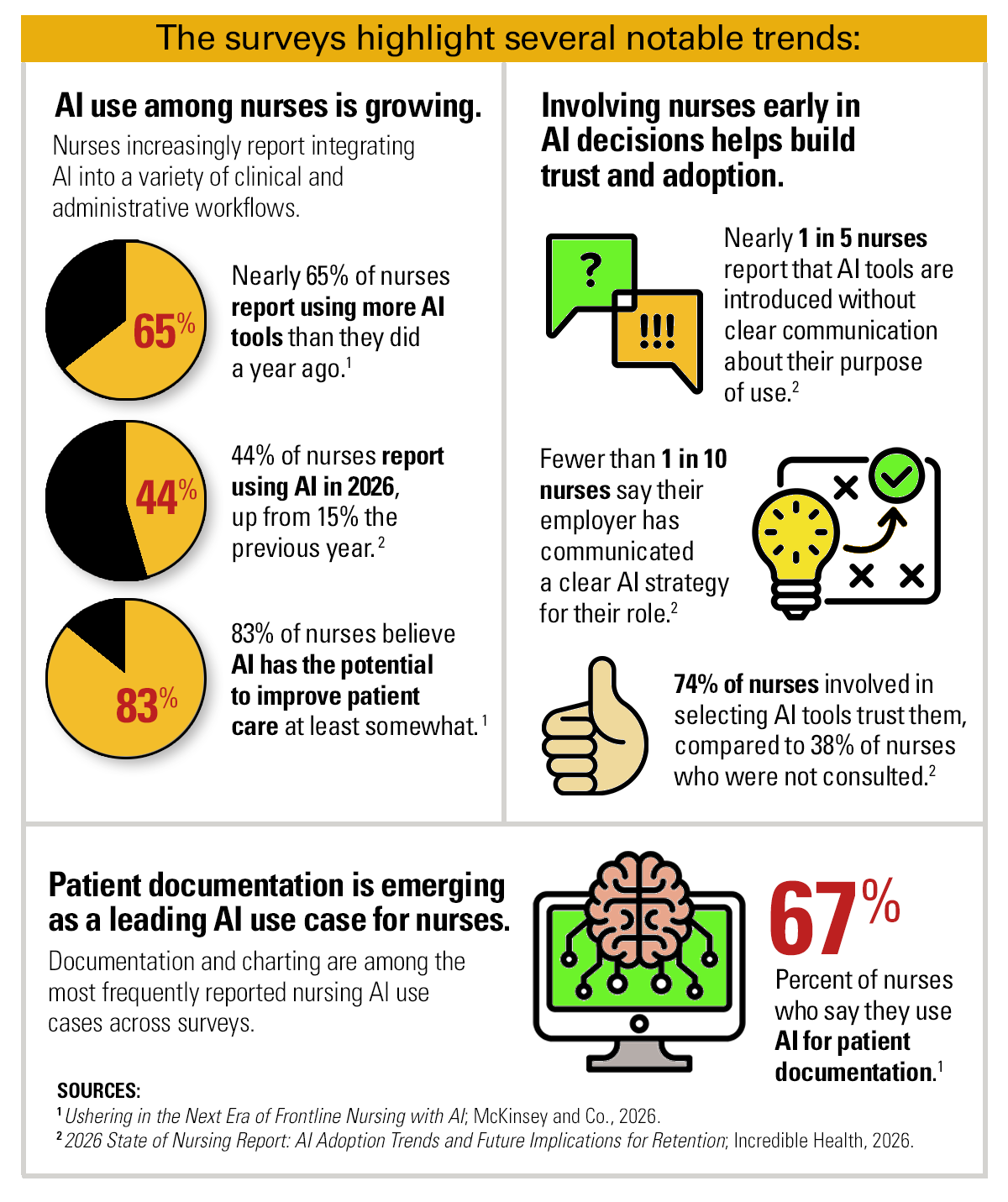
Nearly two-thirds of nurses say they're using more AI tools than they did a year ago, according to McKinsey and Co. Technology companies are responding with tools built for nursing. Last month, Oracle extended its Clinical AI Agent to nurses. The EHR-embedded solution allows for voice-enabled discrete charting and chart navigation and search, along with AI-generated acute nursing summaries.
How Health Systems Are Using AI to Reduce Nurse Documentation Burden and Improve Clinical Workflows
A press release from Oracle announcing the expansion identifies Clearwater, Florida-based BayCare Health System as an early adopter. In an email to Market Scan, Lynnette Clinton, chief information officer at BayCare, said involving clinicians from the start is key to making AI work.
“We see AI as a tool that can help clinicians work more efficiently, but it will never replace clinical judgment or the human connection that is central to patient care,” Clinton said. “For organizations considering AI adoption, our advice is to focus first on the problem you're trying to solve, involve clinicians early in the process and maintain open communication throughout implementation. When technology is designed around the needs of clinicians and patients, adoption and impact are much more likely to follow.”
As AI tools become more common in health care settings, research from McKinsey and Co. and Incredible Health offers insight into how nurses are using these technologies, where they see value and what supports successful adoption.
The Bottom Line for Hospitals and Health Systems
AI is increasingly being used to support nursing workflows, particularly documentation and other administrative tasks. Organizations can improve adoption and outcomes by engaging nurses early, communicating a clear strategy and providing training that helps clinicians use AI effectively and confidently.


Related Resources
AHA Center for Health Innovation Market Scan
AHA Center for Health Innovation Market Scan