

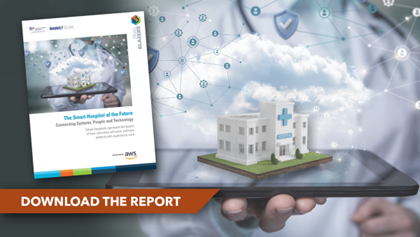
Why Smart Hospitals Are Defining the Future of Patient Care
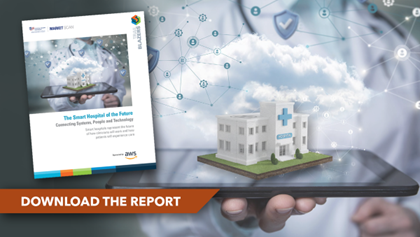
The latest AHA Market Scan Trailblazers report, “The Smart Hospital of the Future: Connecting Systems, People and Technology,” outlines how hospitals are advancing toward more connected, data-driven models of care. According to the report, smart hospitals integrate digital tools, ambient intelligence and virtual care workflows to strengthen clinical efficiency and enhance the patient experience.
A central finding in the report is the importance of modern information technology infrastructure. Cloud-based platforms, interoperable systems and secure data exchange allow hospitals to connect technologies that previously operated in silos. This foundation supports what the report describes as the internet of medical things — a network of medical devices, sensors and software that provides clinicians with real-time visibility into patient conditions, staff activity and safety risks.
Inside the Smart Room — and Beyond the Hospital Walls
The Trailblazers report highlights how these capabilities are converging in today’s smart patient room. Technologies like motion and pressure sensors, patient-facing digital controls and ambient listening tools work together to streamline documentation, detect fall risks and support patient engagement. In one example, an ambient AI tool reduced a specialist’s documentation time from hours to minutes.
The report also notes that smart hospital strategies extend beyond inpatient settings. Integrated virtual visits, automated digital check-ins and home-based monitoring tools help clinicians maintain continuous contact with patients between visits — improving follow-up, reducing readmissions and supporting chronic disease management.
Trailblazer case studies from Ochsner Health, Wellstar MCG Health and Cedars-Sinai illustrate how they are applying these approaches. As documented in the report, these health systems have achieved reductions in documentation burden, transfers and readmissions, while giving clinicians more time for direct patient care.
As hospitals face rising patient needs and ongoing workforce pressures, the report concludes that the smart hospital model offers a powerful path forward: Connected intelligence enables safer, more proactive and more patient-centered care.
Sponsored by:



Related Resources
AHA Center for Health Innovation Market Scan
AHA Center for Health Innovation Market Scan