

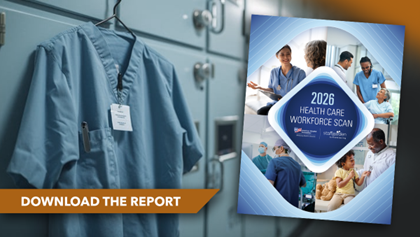
Health Care Workforce: A System Under Pressure, Poised for Reinvention
Hospitals and health systems head into 2026 facing familiar but intensifying headwinds. High labor costs, inflation, supply chain volatility and financial pressures continue to squeeze operating budgets. At the same time, demand for care is rising as the U.S. population ages and patient needs grow more complex.
Layer onto that an exhausted workforce still carrying the weight of years of strain. Burnout, vacancies and administrative burden remain top concerns for health care leaders across the country.
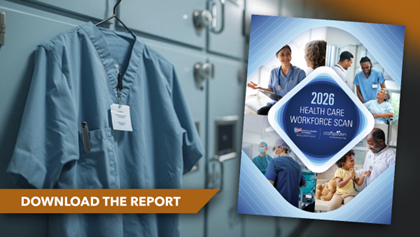
Yet the AHA’s newly released “2026 Health Care Workforce Scan” offers more than a snapshot of persistent challenges. It presents a field in motion — one actively redesigning care, restructuring teams and rethinking how to build a sustainable workforce for the future.
What’s Changing: 6 Forces Reshaping The Workforce
The 2026 Workforce Scan highlights six pressures that will define workforce strategy in the coming years:
1 | Financial Stress That Limits Flexibility
Rising labor and supply costs, inflation and high interest rates continue to erode financial breathing room and drive hospitals to pursue efficiency gains wherever possible.
2 | Demographic Shifts That Increase Demand
An aging nation is accelerating demand for long-term, post-acute and home-based care — and stretching a workforce that is already too small.
3 | Rapid Technological Transformation
Telehealth, digital tools and AI-enabled workflows are expanding across hospitals and ambulatory settings. These innovations introduce new opportunities, but also new training, governance and change-management needs.
4 | Changing Worker Expectations
Clinicians and staff increasingly expect flexibility, growth opportunities, meaningful work and a culture that supports well-being. Organizations that fall short risk losing talent to competitors that adapt faster.
5 | The Urgent Need for New Pipelines
Traditional pathways alone cannot meet future demand. Hospitals are investing in career ladders, apprenticeships, community partnerships and grow-your-own strategies to widen access to health care careers.
6 | Geographic Disparities That Threaten Access
Rural and underserved communities face the steepest shortages. More flexible staffing, virtual models and local workforce development will be essential to avoid widening inequities.
How Hospitals Are Responding: A Shift from Crisis Management to Long-term Redesign
Hospitals no longer are relying on the workforce to simply rebound. Instead, they are strategically rebuilding care teams, modernizing workflows and expanding roles to meet the demands ahead.
Embracing Technology and Integrated Care Models
Health systems are accelerating their use of AI-assisted documentation, clinical decision-support tools, digital scheduling and telehealth to reduce administrative burden and extend capacity without proportional staffing increases. These technologies are particularly impactful when paired with redesigned workflows, a theme repeated throughout the workforce scan.
Rethinking Staffing and Care Delivery
Organizations are adopting new staffing models: alternate career pathways, cross-training programs, remote or hybrid clinical roles and mobile workforce pools. Partnerships with schools, colleges and training organizations also are expanding access to essential roles and building localized pipelines.
Doubling Down on Retention and Engagement
Leaders are shifting focus from short-term recruitment to long-term retention. Strategies include: reducing avoidable administrative burden; addressing burnout and workplace violence; supporting well-being initiatives; strengthening team culture and communication; and improving autonomy and growth opportunities. Retention increasingly is viewed not just as a human relations priority but as a strategic imperative.
Planning for Workforce Resilience
Because financial, demographic and technological pressures will continue to evolve, workforce planning is becoming a core executive function. Forward-leaning organizations are aligning staffing models, technology investments and care-delivery innovation around a long-term strategy — not short-term fixes.
Looking Ahead: A Moment to Rebuild
The workforce challenges ahead are real, but so are the opportunities. The workforce scan makes clear that hospitals already are laying the groundwork for a more resilient, more adaptable and more person-centered workforce.
By reimagining staffing models, leveraging technology responsibly, strengthening training pipelines and investing in culture and well-being, leaders can build a workforce ready not only to meet today’s demands but to shape the future of American health care.
The path forward will require collaboration, creativity and long-term thinking, but the direction is unmistakable: a workforce built not just to survive the pressures of health care, but to transform it.



Related Resources
AHA Center for Health Innovation Market Scan