


AHA Member Spotlight: How 5 Award-Winning Providers Achieved Excellence

Several American Hospital Association (AHA) members have earned recognition for excellent performance from the Malcolm Baldrige National Quality Awards. These award recipients and finalists have demonstrated high achievement in areas such as patient safety and loyalty, care outcomes, community services, financial success and workforce satisfaction.
The Baldrige Performance Excellence Program supports improved performance, resilience and long-term success for businesses and other organizations in the U.S. It provides performance improvement frameworks for various sectors, including health care.
These winners and finalists in the health care field shared insights into how to achieve excellence. (Note: This is not an exhaustive list of high-achieving AHA members.)
 Nor-Lea Hospital District | Lovington, New Mexico
2025 Baldrige Award Recipient
Nor-Lea Hospital District (NLHD) has significantly improved well-being and access to care in the rural area it serves. Since NLHD first embraced the Baldrige Framework for Excellence in 2010, Lea County has risen from No. 33 to 14 in the ranking of 33 counties in New Mexico based on quality indicators measuring health and wellness, said David Shaw, CEO and administrator of Nor-Lea Hospital District.
Additionally, cancer mortality rates have improved from 26% above to about 22% below the national average, and NLHD now meets approximately 92% of the county’s primary care needs.
NLHD achieved these results by establishing a coordinated system of care delivery that includes a critical access hospital, a wellness center, school-based clinics, a specialty clinic, licensed rural health clinics, a cancer center, a state-of-the-art laboratory and an imaging center.
“We really wanted to transform our county,” Shaw said. “We wanted to improve the overall health of our community.”
Vital parts of the process have included defining core competencies (e.g., primary and specialty care) in line with the Baldrige framework, and learning from other health care organizations.
“We seek out those best-practice hospitals,” said Hans Baijense, director of performance excellence for Nor-Lea Hospital District. “We look at their processes and then adapt some of their best practices and make them our own.”
Keys to Success:
- Improving community health through actions such as opening a wellness center.
- Partnering with medical schools and residency programs and launching NLHD’s own family medicine residency program to recruit physicians.
- Building relationships within the community and with legislators to stay up to date on policies and projects that could affect or involve NLHD.
- Looking to organizations outside of health care for ideas. For instance, the hospital district turned to a car dealership for supply chain process best practices. “Supply chain is supply chain no matter who you are,” said Nor-Lea Hospital District Chief Nursing Officer BranDee Savell, R.N.
- Involving frontline staff in the strategic planning process.
“Our hope is that rural hospitals will embrace some of this framework,” Savell said. “Rural hospitals are struggling everywhere, and we think we have some keys that would make them very, very successful.”
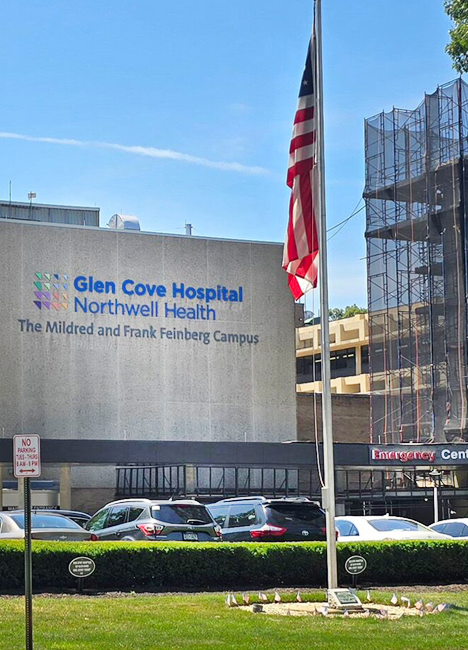 Northwell Glen Cove (New York) Hospital
2025 Baldrige Award Recipient
Northwell Glen Cove Hospital — part of New Hyde Park, New York-based Northwell Health — earned recognition for delivering personalized, high-quality care, facilitating medical education and research and supporting community outreach. The hospital’s inpatient, acute rehabilitation, emergency and ambulatory surgical services exemplify patient-centered care delivery. Also of note is the hospital’s Age Friendly initiative, focused on improving care for older adults .
“Northwell is dedicated to quality,” said Maria Torroella Carney, M.D., president of Glen Cove Hospital. “That’s an expectation of all our hospitals, but we are honored that Glen Cove Hospital has been recognized at a national level to have done it well.”
Keys to Success:
- Comparing performance to leaders in health care nationwide. “We’ve learned from other hospitals, and we’re definitely going to pay it forward and continue to learn and evolve,” said Mary Curran, R.N.-B.C., senior director of quality and continuous performance improvement at Glen Cove Hospital.
- Employing a multidisciplinary approach where everyone at the hospital has a voice.
- Grounding everything (including their strategic plan and goals) in the hospital’s mission, vision, values and core competencies.
- Drawing inspiration from other fields. For example, Carney noted the similarities between health care and education: Just as schools consider students’ families, “we also have the family of the patient, or who they call their family.”
- Having the “humility to learn,” a characteristic that Carney said Peter Hilt, superintendent of Baldrige finalist and Best Practice Spotlight recipient El Paso County, Colorado, School District 49, mentioned at the Baldrige Foundation’s 2026 Quest for Excellence Conference. His point resonated with Carney: “That is a really important trait to have to improve, grow and move forward,” she said in an email.
At the end of the day, it’s not about awards and recognition. “We don’t do it for the competition,” Curran said. “We do it for the patients, families and communities we serve.”
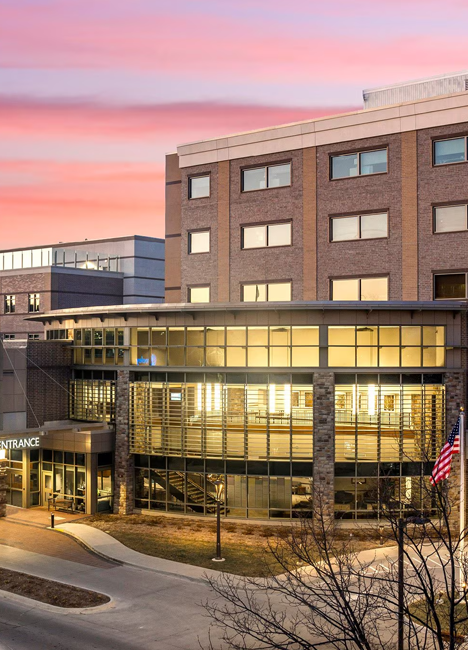 Mary Greeley Medical Center | Ames, Iowa
2025 Baldrige Award Finalist and Best Practice Spotlight Recipient
Mary Greeley Medical Center (MGMC) — which also received a Baldrige Award in 2019 — stands out for its unique approach to behavioral health and community well-being. The provider combines the Baldrige-based Communities of Excellence framework with the Alternative Response for Community Health (ARCH) model, a 911-dispatched service that sends an unmarked vehicle staffed with a paramedic and a social worker.
“Many of these calls come from people experiencing mental health crises, but they don’t need the flashing lights and sirens of a police car,” said Karen Kiel Rosser, vice president and chief quality and strategy officer at Mary Greeley Medical Center. “They just need support."
The program helps ease crowding in the emergency department, where Rosser notes that wait times have risen over the past few years to two to four hours. Over a three-year period, ARCH helped avoid an estimated 1,629 calls for other services and saved $626,650 in potential ER, ambulance, police and fire department costs.
Keys to Success:
- Meeting people where they are. “If somebody is living under the bridge, ARCH is meeting them under the bridge,” Rosser said.
- Bringing community leaders together. ARCH launched in 2022 as a six-month pilot, developed through collaboration among MGMC, the Ames Police Department and the Iowa State University Police Department. Other partners include United Way of Story County, Downtown Ames, Ames High School and Story County, Iowa.
- Looking to others for inspiration. Rosser notes that there are initiatives like ARCH in Oregon and Colorado: “Build something that works in your own community and addresses common problems through collaboration.”
- Adding a four-legged team member. A support dog, Archie, will join the ARCH team once he completes training. “Dogs have a tendency to calm situations,” Rosser said.
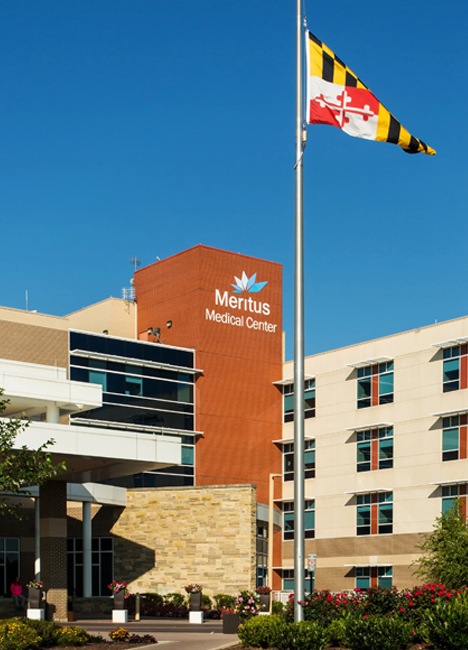 Meritus Medical Center | Hagerstown, Maryland)
2025 Baldrige Award Finalist and Best Practice Spotlight Recipient
Meritus Medical Center (MMC) received recognition for its Food Farmacy program, which provides food as medicine to patients in need. The initiative is part of the provider’s larger efforts to improve the health of the surrounding community.
MMC started addressing food as a social determinant of health a couple of years ago with “care to share” boxes in the ER, main lobby and medical office building that the provider filled with food for those who needed it.
“We wanted to get more targeted, so last year we made it so our providers can prescribe food as medicine,” Meritus President and CEO Maulik Joshi said.
Now, if a patient mentions during an appointment that food is a challenge, the clinician can prescribe food through the Epic electronic health record. The patient then receives about 12 weeks of free food, approximately $50 worth per week. The prescription varies depending on the patient’s condition; for instance, someone with diabetes will receive items to help manage their blood sugar. MMC also offers cooking demo classes to help people on the path toward healthy eating.
Food Farmacy isn’t the only program improving social determinants of health at MMC. The provider also launched a “care callers” program to help people feel less lonely and a free transportation program, which now has 11 vans available.
Keys to Success:
- Establishing a strong foundation for ongoing improvement. “It starts with a good strategic plan with some big aspirational goals, and then it moves into the day-to-day improvements to support people,” Joshi said.
- Constantly striving for stellar performance. “We have a very robust improvement process where teams on the front line are working on improvement projects all the time,” Joshi said. Additionally, MMC conducts weekly walkarounds, during which leaders visit different areas to hear about ongoing projects.
- Establishing dashboards with metrics to monitor outcomes so the team can track their progress.
- Developing a culture that supports high achievement. For MMC, that includes goal setting, employee rounding and hosting twice-yearly “all in” celebrations where they share stories about how team members support each other and take care of patients’ needs. “It’s our way to engage, excite and make people proud,” Joshi said.
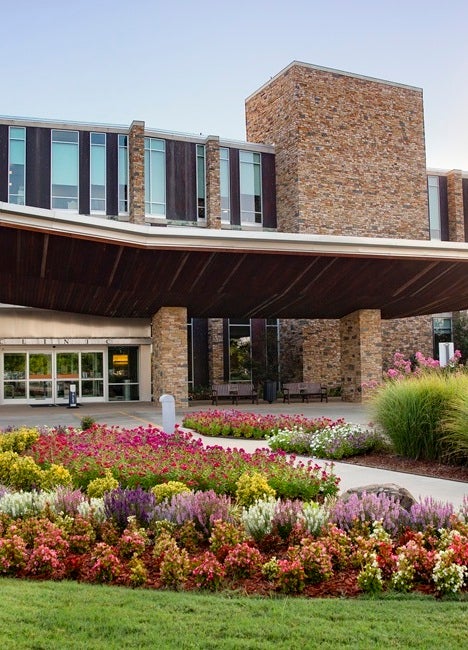 Chickasaw Nation Department of Health | Ada, Oklahoma
2024 Baldrige Award Recipient
The Chickasaw Nation Department of Health (CNDH) received a Baldrige Award (the sole honoree in health care in 2024) for its achievement in the areas such as patient safety and loyalty, workforce and leadership development, community contribution, financial viability and effective risk management, according to the National Institute of Standards and Technology. CNDH serves 13 counties in southern Oklahoma and provides inpatient, outpatient and population health services.
The 2024 award recognizes Chickasaw Nation Medical Center, all CNDH clinics, and the public health and nutrition services teams. Reaching this level of excellence was the result of a multi-year journey, though the organization had already established several strong foundational elements. As Amber Wilson, executive officer of quality for the Chickasaw Nation Department of Health, notes, one of those strengths was a solid foundation of leadership.
“We look to be the health care provider of choice for our patients and our community,” Wilson said.
In addition to ranking in the top decile nationally for total workforce turnover and patients’ willingness to recommend, other factors contributing to the 2024 award include CNDH’s improvement in same-day access to primary care, which increased by more than 140% compared with pre-pandemic levels.
Keys to Success:
- Standardization of the budgeting process. The CNDH finance team mapped out their budgeting process — putting it on paper, maximizing transparency and standardizing it across all locations.
- Creating a robust quality division to support improvement. “Since then, we’ve grown our quality and patient safety measures by leaps and bounds,” Wilson said.
- Keeping the organization’s mission in mind. The CNDH hiring procedures include assessing whether candidates support the organization’s mission. “It’s not just a slogan on a business card somewhere,” Wilson said. “We really implement that in every service and process we have.”
- Mitigating risk through proactive assessments and by encouraging staff to report any issues. Other key strategies include conducting tabletop drills and walking through possible risk-related scenarios.
Ultimately, Wilson advises other health care leaders pursuing excellence to simply get started. “If you wait for the perfect opportunity or the perfect plan, it’s never going to happen,” she said.



Related Resources
AHA Center for Health Innovation Market Scan
AHA Center for Health Innovation Market Scan