


Inside 2025’s New Wave of Community-Centered Care

1 | Food As Medicine Pilot Launched in NYC
This year in New York City, Episcopal Health Services (EHS) launched a six-month Food As Medicine pilot for adults with Stage 2 hypertension who are also food insecure. Participants receive a personalized nutrition plan from a registered dietitian, weekly medically tailored groceries through Campaign Against Hunger, monthly cooking demonstrations, and regular check-ins from a population health nurse. Patients also return to primary care at one, three and six months for monitoring and care adjustments.
The goals reach beyond nutrition alone, reducing food insecurity, improving glucose and blood pressure control, strengthening self-management and lowering emergency department (ED) utilization. For EHS, the program doubles as a social impact investment and a population health strategy, targeting high-risk patients with clinical oversight while relying on community partners to deliver nonclinical intervention at scale.
It’s one of many examples of how hospitals in 2025 are shifting from “care when you arrive” to “care where you live.” Across the country, health systems are moving beyond episodic treatment toward integrated, community-centered care models that combine medical services with social support and sustained follow-up. These programs are reshaping how hospitals manage access, risk and utilization — delivering better outcomes for patients while strengthening long-term organizational stability.
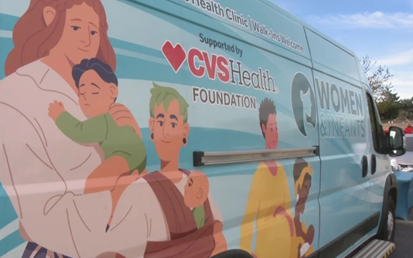
2 | Mobile Postpartum Care for Better Maternal Outcomes
In Providence, Rhode Island, Women & Infants Hospital launched its Community Mobile Health Unit in October focused on postpartum patients. The mobile clinic provides blood pressure checks, screening and support for postpartum depression, and other maternal health services in community locations.
The unit builds on the hospital’s existing postpartum hypertension program, which already sends patients home with blood pressure cuffs and the ability to send readings to a nurse practitioner to review. The difference now: Care teams can reach patients directly in neighborhoods where transportation, childcare and work constraints often derail follow-up care.
For hospital leaders, the value is clear — better maternal outcomes, fewer preventable readmissions and a stronger access strategy in a state where maternal health disparities remain a pressing concern.

3 | Data-Driven Addiction Care in the South Bronx
At NYC Health + Hospitals/Lincoln, a new hotspotting program launched in April uses predictive analytics and intensive follow-up to support patients with opioid-use disorder. Patients seen in the ED for opioid-related care are identified as high risk and connected to a dedicated team of community health workers and peer counselors.
For up to a year after discharge, the team maintains biweekly contact, helping patients access addiction treatment, primary care, mental health services, housing and benefits — even providing a cellphone to maintain continuity. The model builds on previous Staten Island results that showed dramatic reductions in overdose deaths, nonfatal overdoses and ED visits. For Lincoln, hotspotting offers a way to confront one of New York City’s most urgent public health crises while lowering avoidable, high-cost utilization.
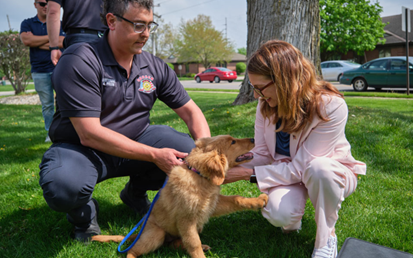
4 | Community Crisis Response
Launched this year, the new Goshen (Indiana) Mobile Integrated Health program brings together trained mental health officers, community paramedics, licensed clinicians — and soon a therapy dog named Mindy (above) — to respond to crises where they occur. Shifting from law enforcement or ED transport, residents receive on-site de-escalation, addiction and mental health support, home safety assessments and connections to longer-term services. Goshen Health serves as a central clinical partner.
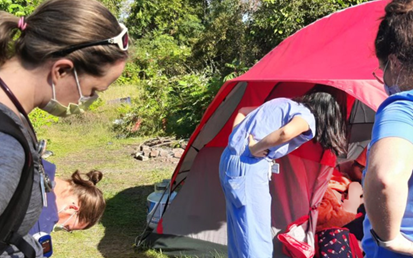
5 | Delivering Street Medicine in Rural Michigan
Further north, Munson Healthcare and its partners are expanding care to people experiencing homelessness across rural northwest Michigan. In November, Munson received a $2.5 million Health Resources and Services Administration grant for a five-year Rural Street Medicine Residency Expansion Project, building on a street medicine program that already has delivered more than 1,000 visits to 400 patients living in encampments and shelters.
Family medicine residents now will spend part of their training delivering care in mobile units, shelter-based clinics and encampments, supported by an advisory board that includes people who have experienced homelessness. For Munson, the initiative blends community benefit, workforce development and clinical innovation to create a pipeline of physicians skilled in complex community-based care.
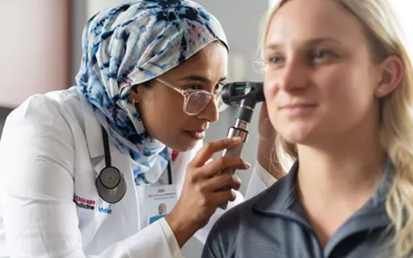
6 | Turning Sports Hubs into Care Hubs
In June, the Glendale Heights Sports Hub outside Chicago became a full-scale extension of UChicago Medicine AdventHealth’s year-round, systemwide community engagement strategy, which is designed to shift care upstream by embedding health services directly into neighborhoods with the greatest access gaps. More than 170 uninsured and underinsured residents received primary care, dental exams, vision screenings, diabetes education, physical therapy and pharmacy support — all at no cost, all in one location. The clinic reflects the system’s broader approach to meeting patients where they are, both geographically and socially, by pairing medical services with on-site connections to food access, housing support, transportation and behavioral health resources.
The event mobilized more than 80 clinical and nonclinical volunteers alongside a dozen community partners, reinforcing an operating model built for sustained community presence rather than episodic outreach. For UChicago Medicine AdventHealth, the popup clinic served as one highly visible access point into a wider network of mobile clinics, community-based screenings, chronic disease management programs and referral pathways designed to close care gaps and strengthen long-term follow-up for populations that often struggle to access traditional care settings.
Strengthening Hospitals by Strengthening Communities
Across these programs, a consistent pattern emerges:
- Better outcomes upstream — earlier diagnosis and chronic disease management, improved maternal health, fewer overdoses and crisis events.
- Reduced avoidable utilization — fewer preventable ED visits and readmissions, especially among high-risk patients.
- Improved access and community trust — visible action on social determinants in underserved neighborhoods.
- A more engaged workforce — physicians, nurses and residents who say this work reconnects them to their sense of purpose.
As hospitals face persistent financial pressures, workforce strain and rising patient complexity, these 2025 initiatives signal a new operating model — one in which hospitals function as anchors within a wider ecosystem of community-based care. When hospitals step outside their walls, they don’t just strengthen community health, they strengthen their own long-term resilience.
Learn More with These AHA Population Health Initiatives
- Hospital Community Collaborative: Online program with resources to help hospitals and community organizations reduce health disparities.
- AHA CHA Toolkit: Guides hospitals in creating intentional processes to address disparities in Community Health Assessments.



Related Resources
AHA Center for Health Innovation Market Scan
AHA Center for Health Innovation Market Scan
Case Studies
Issue Landing Page